

Key Takeaways
- Attorneys may request polygraph examinations before filing a case to assess the credibility of clients and witnesses when facts are disputed and evidence is limited.
- Polygraph testing can help attorneys determine whether a potential claim or defense is strong enough to justify further legal action and investment.
- The results may support pre-litigation settlement discussions by providing additional information that encourages more productive negotiations.
- As part of a broader investigative strategy, polygraph examinations can help attorneys identify inconsistencies, prioritize leads, and focus further fact-finding efforts.
Conflicts frequently begin long before a lawsuit is filed or the criminal charges are disputed. At this point, lawyers need to investigate the facts, ascertain witness credibility, and decide if there is adequate support for the case.
But that process isn’t necessarily simple. Misaligned timelines, contradictory information, and a lack of evidence can make it hard to tell the truth from the accusations.
Attorneys, therefore, search for other investigative tools that can shed light on disputed matters before investing valuable time and resources in a case.
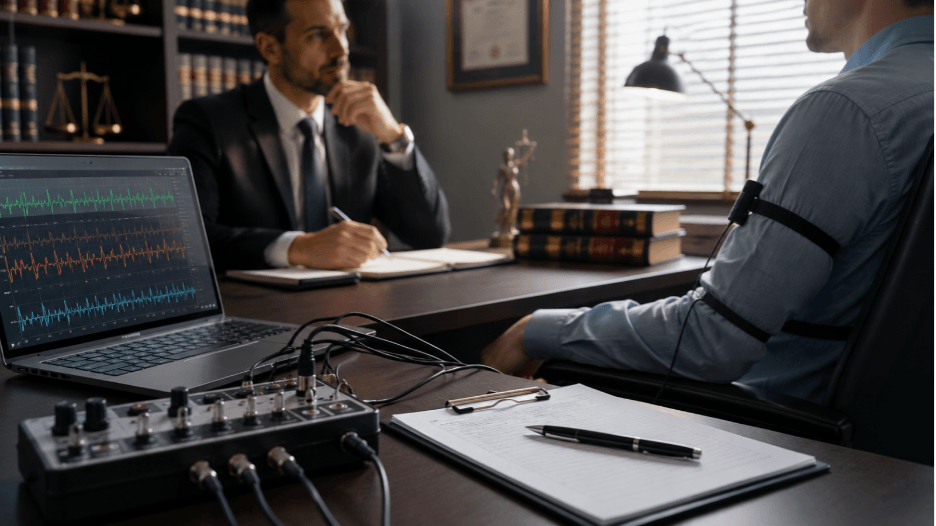
One such tool is the polygraph examination. It is not a substitute for evidence or legal analysis, but it can be helpful to understand the credibility of important parties to a dispute.
Having said that, let’s explore when attorneys might seek a polygraph examination prior to filing a case, and how the results of that examination can be used in the initial case assessment.
Table of Contents
- Assess Credibility of Clients and Witnesses
- Determine Whether Case is Strong Enough to Pursue
- Support Settlement Discussions Before Litigation
- Guide Investigative Strategy Before Filing
- Making More Informed Legal Decisions
1. Assess Credibility of Clients and Witnesses
Attorneys must be confident in the information received from their clients and witnesses before filing a lawsuit. Even if the person seems to be telling the truth, an attorney should thoroughly consider whether the facts will hold up if the case moves forward.
Therefore, a lie detector test might be requested early in the preparation of a case. The examination may provide further information to the attorney about the credibility of testimony on particular matters.
This may be helpful where there are no independent witnesses or when the available evidence doesn’t strongly point in one direction. Attorneys can use polygraph testing as part of a more comprehensive fact-finding process, rather than relying solely on verbal evidence.
To support this use, a 2021 meta-analysis in the journal Applied Cognitive Psychology concluded that the Comparison Question Test could be useful for detecting truthful responses from deceptive responses. Consequently, it can be a helpful aid in assessing credibility and in investigating reviews.
In addition, the findings can be used to identify areas needing further investigation. In certain cases, an examination can be used to increase confidence in a client’s story. In other instances, it can demonstrate inconsistencies which require further investigation prior to initiating legal action.
Thus, lawyers can make better decisions about the strength and direction of a potential case.
2. Determine Whether Case is Strong Enough to Pursue

Filing a lawsuit or initiating a legal challenge requires substantial time, effort, and financial resources. For this reason, lawyers should assess if a case is viable before pursuing it.
This becomes more complicated when evidence is scant, and the disagreement is focused more on conflicting statements. In these cases, a polygraph test may offer further information regarding the viability of a claim or defense for an attorney to evaluate.
For instance, an attorney representing a client in a case of fraud, theft, or misconduct could request a polygraph examination to gain insight into the facts and events of the case before initiating formal legal proceedings. The examination may be a part of a broader investigative approach that involves document examination, witness interviews, and the collection of evidence.
Furthermore, the discovery of potential vulnerabilities at an early stage can avoid any unnecessary litigation. Attorneys can raise concerns before filing a case, rather than finding out about them later in the legal process.
3. Support Settlement Discussions Before Litigation
Not all conflicts need to be resolved in the courts right away. In many cases, attorneys look for chances to settle disputes prior to a lawsuit being filed.
Settlement discussions can be challenging when there is a strong disagreement between the parties regarding what happened. Both parties can be rigid in their version of events, which can make negotiations difficult.
Under these conditions, a polygraph test can offer extra details that might lead to meaningful conversations. The results won’t necessarily settle a dispute but may present new facts for attorneys and parties to consider.
In addition, a person’s decision to submit to a polygraph examination voluntarily can affect the other party’s assessment of the issue. This can sometimes open up a negotiation space that may not otherwise have existed.
Consequently, when appropriate, attorneys can incorporate the polygraph examination into their overall strategy to reach a resolution quickly and without extended court disputes.
4. Guide Investigative Strategy Before Filing

One of the most important responsibilities of an attorney is developing an effective investigative strategy. Before filing a case, attorneys often need to determine which leads deserve further attention and which issues require additional verification.
A polygraph examination can assist with this process by helping attorneys focus their investigative efforts on specific areas of concern. Rather than pursuing multiple uncertain theories, they may gain better direction regarding which facts should be explored further.
For instance, the examination may identify inconsistencies that warrant additional interviews or document reviews. Conversely, it may support certain claims that appear credible and deserve further development.
This can be especially valuable in cases involving allegations of misconduct, workplace disputes, fraud investigations, family conflicts, or other situations where objective evidence is limited.
Making More Informed Legal Decisions
Attorneys face significant challenges when evaluating potential cases. Limited evidence, conflicting accounts, and credibility concerns can create uncertainty during the early stages of legal preparation.
Therefore, some attorneys request polygraph examinations before filing a case to obtain additional insight into disputed facts. Whether assessing witness credibility, evaluating case strength, supporting settlement discussions, or guiding investigative efforts, polygraph testing can contribute valuable information to the decision-making process.
Although a polygraph examination is not a substitute for evidence, it can serve as a useful investigative tool when used alongside other legal and fact-finding methods. By gathering as much reliable information as possible before taking legal action, attorneys can better protect their clients’ interests and make more informed strategic decisions.