
Key Takeaways
- A biased examiner may jeopardize the whole result of the polygraph test.
- This factor should not be considered trivial, because the examiner’s neutrality is fundamental for the polygraph test.
- When validated polygraph procedures are applied by an unbiased examiner, the result is highly reliable.
- Do not forget to check the qualifications of the examiner prior to conducting a polygraph test.
When people are involved in a high-conflict investigation, they are often looking for one thing above all else: an objective path to the truth. Unfortunately, intense disagreements can make it difficult to separate facts from assumptions.
That is why the role of the examiner matters so much during a polygraph examination.
A neutral examiner helps ensure that the process remains fair, professional, and focused solely on the information being evaluated. In situations where the stakes are high, that neutrality can be just as important as the testing itself.
Most of the attention is paid to the technology itself; people try to learn about its accuracy and reliability. However, they forget to pay attention to one crucial factor – the examiner’s neutrality.
There is no need for an examiner to manipulate data on the polygraph to impact the test results. Minor things such as the way questions are asked and the use of different testing techniques can influence outcomes. For a conflict situation, the smallest influences matter.
So, are you interested in understanding how bias can impact investigations?
Learn more about examiners’ neutrality, reasons for bias, and the importance of considering this problem here.
Table of Contents
- Why Examiner Neutrality Defines the Outcome
- How Bias Contaminates High-Conflict Polygraph Results
- The Role of APA-Validated Techniques in Neutrality
- Question Design — Where Neutrality Becomes Visible
- How to Identify a Truly Neutral Examiner
- Neutrality as the Cornerstone of Trust
- FAQs
Why Examiner Neutrality Defines the Outcome
The accuracy of a polygraph test depends on the quality of the professional who conducts it.
The polygraph records physiological responses associated with stress and cognitive processing. These include increases or decreases in blood pressure, pulse rate, respiration, and electrodermal activity. However, the machine is an objective measure, while the individual who asks the questions and interprets the results makes decisions. The human factor plays an important role in an otherwise objective procedure.
The neutral investigator comes to the session without preconceived notions and allows the evidence to guide him/her. Where there is no neutrality, a subjective factor becomes evident from the start.
The first step toward accuracy lies with the human being and not the machine.
How Bias Contaminates High-Conflict Polygraph Results
It is difficult to identify bias within a polygraph examination. This makes bias particularly threatening.
Within an infidelity relationship polygraph investigation, an empathic examiner may conduct the pre-examination interview in a manner that increases anxiety prior to conducting the actual test. The increased anxiety impacts the reading on the chart and influences the physiological responses.
Within a criminal defense exam, the examiner might employ a multiple-issue test format rather than a single-issue test, which would yield far greater accuracy. It has been shown through research that including just one relevant question in the specific-issue test doubles the margin for error.
Here is a diagram explaining the factors influencing natural and biased examiners and their impact.
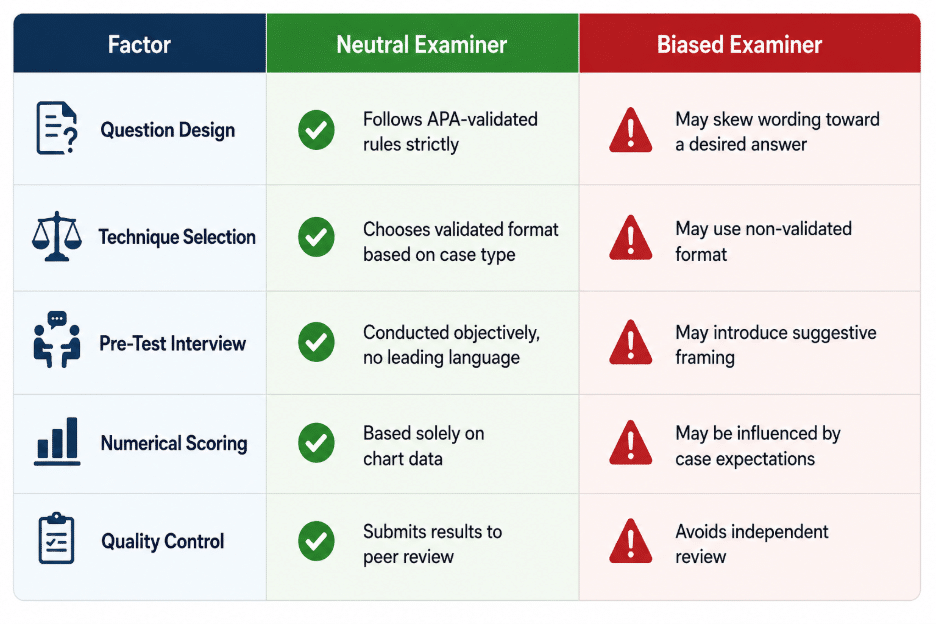
A single biased decision at any point in this chain can invalidate the entire examination.
Role of APA-Validated Techniques in Neutrality

The use of APA-validated techniques by a neutral examiner is one of the most reliable ways to ensure the integrity of the process.
According to the standards set by the American Polygraph Association, any technique applied in a polygraph test needs to demonstrate at least 90% accuracy in case of specific issue tests. Research conducted among more than 6,300 field tests proved that accuracy reached its average peak of 88% when applying validated techniques.
In addition, neutral examiners also apply a technique called Quality Control, when an independent person reviews the charts and scores the test again.
Quality Control is an essential procedure for every reliable polygraph expert.
The fact that your neutral examiner does not know which APA-validated technique he/she uses or that he/she has never gone through a Quality Control process is an alarming sign.
Question Design — Where Neutrality Becomes Visible
The APA standards are specific; each question should have a ‘yes’ or ‘no’ answer. The question shouldn’t be a hypothesis, subjective, compound, or confusing, and every question in one examination should be related to the same issue.
A neutral examiner sticks to the above guidelines and develops the questions in collaboration, having all terms defined before developing the questions.
In controversial issues like criminal defense polygraph tests, biased questions will trigger physical reactions, thus making the truth seem like deception. It is not a matter of ethics but a necessary condition for the validity and legal admissibility of the polygraph test.
How to Identify a Truly Neutral Examiner
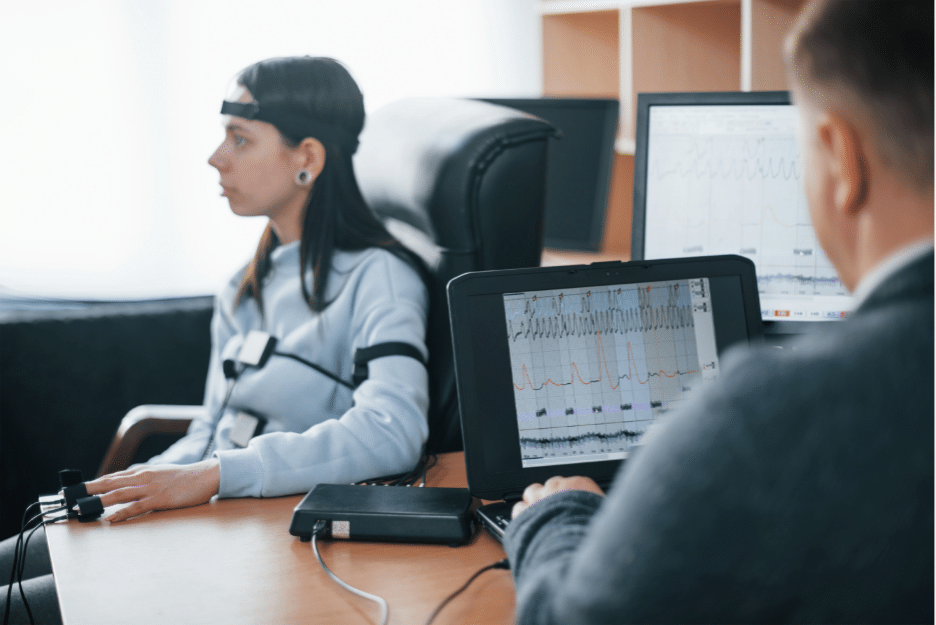
Here are certain parameters that you can use to identify a truly neutral examiner:
- Firstly, look at qualifications. The ideal one must possess a certificate obtained from an accredited school recognized by APA and must have undergone continuous education and quality control.
- Secondly, find out about the test method. The objective one mentions the method that has been tried and tested on you and elaborates on why it suits you.
- Third, pay attention to the pre-test consultation process. This step involves collecting information regarding the issue while being objective; in other words, neither side’s story is confirmed during this stage. This is particularly important for tests involving relationships and infidelity.
- Lastly, ask if the results will be peer-reviewed. An open-minded examiner allows others to review their work since there is nothing to be ashamed of.
Neutrality as the Cornerstone of Trust
The neutrality of the examiner is not an added advantage; it is the basis of every good lie detector test.
During highly charged investigations, when everything is at stake and emotions are running high, even an unneutral examiner could quietly destroy the validity of results that could mean life and death for many individuals.
Neutrality is exhibited throughout the entire testing process, from selecting the proper technique to the formulation of the questions and even during peer reviews.
Before taking the polygraph test, ensure that your examiner passes the credibility test.