
Key Takeaways
- Relationships, career, and emotional well-being can be impacted by personal reputation disputes.
- Certain people willingly undergo a polygraph test to justify their side of the story in case of undiscovered evidence.
- Professionally administered examinations must be based on validated procedures and administered by qualified examiners.
There are hardly any circumstances that are as frustrating as being suspected of dishonesty without any clear indication. False allegations, misunderstandings, or lingering suspicions will soon harm relationships, impact professional opportunities, and cause stress. Conversations and explanations are helpful, but sometimes they fail to eliminate doubt. As a result, some people look for an objective way to demonstrate their willingness to be transparent.
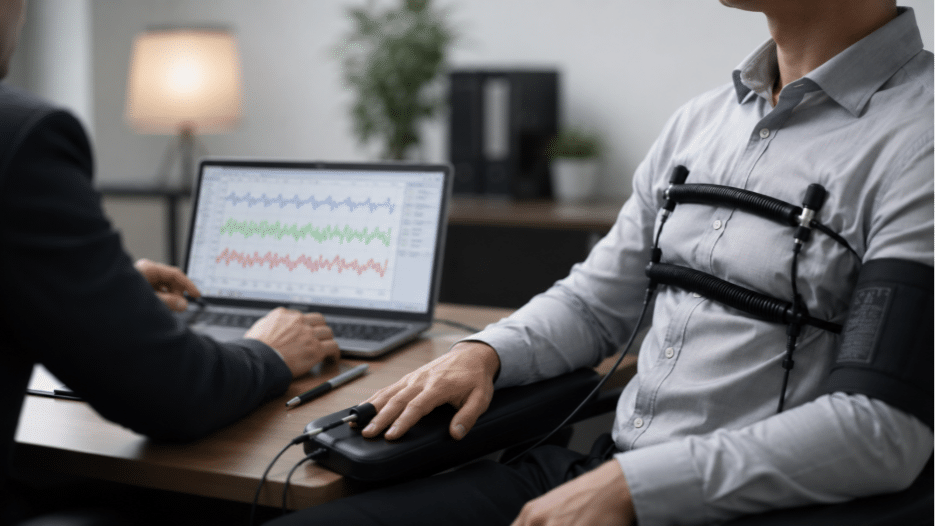
In some cases, a polygraph examination that is professionally administered is involved in that procedure. Instead of substituting facts or investigations, it is able to add supplementary information that aids in answering unanswered questions.
This blog explains why some individuals choose this option when trying to protect or restore their personal reputation.
Table of Contents
- Demonstrate Willingness to Be Transparent
- Address Situations Where Evidence Is Limited
- Support Constructive Conversations and Resolution
- Reduce Ongoing Uncertainty and Social Speculation
- Restoring Confidence Through Verified Facts
1. Demonstrate Willingness to Be Transparent
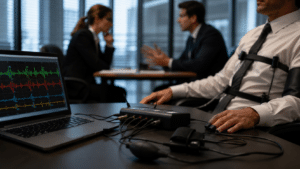
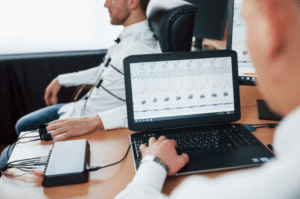
When your integrity is questioned, actions often speak louder than repeated explanations. That is why some people willingly undergo a lie detector test in order to prove that they are ready to take an unbiased test. In spite of the fact that the examination does not substitute for evidence, it can demonstrate to other people that the individual is determined to provide answers to questions, rather than evading them.
This method is usually taken into consideration when the accusations concern family conflicts, work-related disputes, monetary disputes, or broken friendships. In most of these cases, there might be a scarcity of physical evidence, and either party cannot resolve the dispute by talking to each other.
Professionals such as Global Polygraph Network assist individuals in identifying qualified examiners who abide by accepted testing protocols. The focus of the organization on proven methods, proper question development, and qualification of examiners shows the significance of performing examinations based on professional principles instead of using an unproven approach.
2. Address Situations Where Evidence Is Limited
Numerous reputation cases comprise opposing narratives rather than evident evidence. One person believes one version of events, while another strongly disagrees. As a result, the conflict may last months, or even years, without any significant development.
Under such situations, there are people who voluntarily undergo a polygraph test in order to have a second source of information. The analysis becomes part of a larger work to elucidate controversial facts as opposed to being the only foundation for a conclusion.
Studies also underscore the reasons why uncertainty may render such situations particularly challenging. According to a 2021 study by the Journal of Social and Personal Relationships, suspicion and lower trust are key factors that result in relational uncertainty, and thus, it is more difficult to regain confidence once doubts arise.
Although no analysis can eliminate all conflicts, the incorporation of professionally assembled information can assist in shifting the discourse out of conjecture and into a more accurate analysis.
3. Support Constructive Conversations and Resolution
Reputational conflicts are usually emotional since every debate strengthens existing opinions. At some point, effective communication can cease.
Sometimes the decision to have a voluntary examination may alter the course of such conversations. Rather than concentrating solely on accusations, all parties involved can take a moment to reflect on other details collected in a systematic manner.
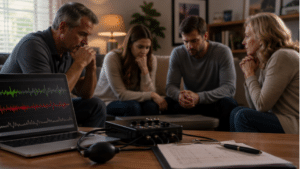
Importantly, the purpose is not to “win” an argument. Rather, the analysis can be used to minimize doubt, promote open conversation, and give a basis to subsequent judgment. Regardless of whether the conflict concerns a family member, a close friend, or even a work-related relationship, the introduction of an objective evaluation can help both parties to view the problem more objectively.
4. Reduce Ongoing Uncertainty and Social Speculation
When personal reputation is affected, one of the most challenging aspects is not only the initial allegation but the continued uncertainty that follows. Rumors, assumptions, and repeated retellings can keep the issue active long after the original disagreement. Some individuals therefore choose a lie detector test as a way to create a clear moment of resolution that helps bring prolonged speculation to an end.
In some cases, this decision is also driven by the need to regain control over an issue that continues to circulate without resolution. By agreeing to a structured and professionally administered process, individuals hope to replace ongoing informal discussion with a more focused, time-limited evaluation. This can be particularly important when repeated conversations or explanations have failed to stop the spread of doubt or misunderstanding.
By introducing a structured, time-bound process, they aim to shift attention away from ongoing informal discussion and toward a defined point where the matter can be reconsidered and, ideally, set aside. This can help reduce the social momentum that often keeps reputation disputes alive, allowing individuals to move forward with fewer repeated challenges to their character in everyday personal or professional settings.
Restoring Confidence Through Verified Facts
Personal reputation is difficult to build and easy to damage. When questions remain unanswered despite honest communication, some individuals voluntarily choose a polygraph examination to demonstrate transparency and contribute additional information to the discussion.
Although a polygraph examination is not a substitute for evidence, it can become a valuable part of a broader fact-finding process when conducted by qualified professionals using validated procedures.
By working with organizations such as Global Polygraph Network, individuals can access experienced examiners who prioritize professionalism, consistency, and recognized testing standards while helping people navigate difficult personal reputation disputes.