
Key Takeaways
- Polygraph examination reinforces a personal investigation by assessing the statements obtained in the process of the investigation.
- Polygraph testing enables investigators to reduce the scope of an investigation when the evidence or testimonies contradict.
- Polygraph results are not examined in isolation but together with the documents, interviews, and other evidence.
Personal investigations seldom lead to direct results. Despite the examination of documents, questioning witnesses, and gathering all the available evidence, some crucial questions may still be left unanswered. The inconsistency of information, the absence of certain facts, or the absence of tangible proof can frequently result in confusion as to where an investigation should proceed next.
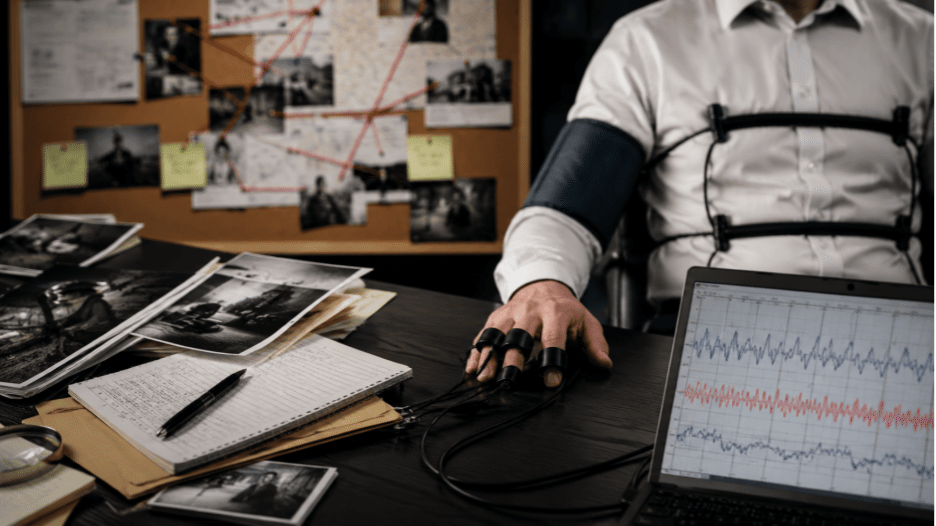
Instead of making assumptions, investigators employ various tools in developing a complete picture of the facts. A polygraph examination is one such tool. Nonetheless, it is not intended to substitute investigative work. Rather, it enhances the general procedure by assisting investigators in analyzing particular statements in the framework of the overall case.
This article explains exactly how a polygraph test fits into a comprehensive private investigation and why it works best as part of a broader investigative strategy.
Table of Contents;
- Verify Statements Collected During the Investigation
- Narrow the Focus of the Investigation
- Corroborate Other Investigative Findings
- Support Better-Informed Investigative Decisions
- Building Stronger Investigation
1. Verify Statements Collected During the Investigation
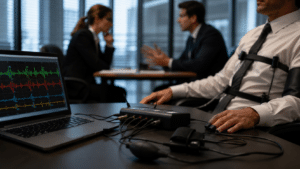
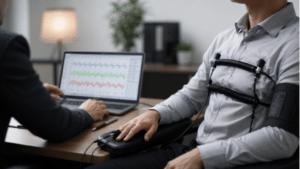
A polygraph test is usually included in a private investigation after investigators have acquired the fundamental facts. They question people involved, look at documents, create timelines, and find inconsistencies before advising an examination. After these steps have been taken, a polygraph can be used to assess statements that are directly linked to the problem being examined.
To illustrate, in a case involving employee theft, two people can produce different versions of the story. Surveillance footage may be incomplete, and witness testimony may not align. A polygraph examination enables investigators to determine the truthfulness of what each individual told about the incident rather than speculation.
This provides another source of information to consider. Instead of substituting for interviews or gathering evidence, the examination supplements the already accomplished work.
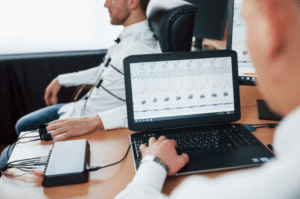
In fact, professional organizations such as Global Polygraph Network emphasize that a properly conducted examination begins with a detailed pre-test interview, ensuring questions are clear, relevant, and focused on the facts of the investigation.
2. Narrow the Focus of the Investigation
An in-depth investigation usually concerns several leads. Although investigators initially investigate every possibility, following through on all leads can be both time- and resource-consuming. This is where the polygraph examination is incorporated into the investigation process.
Based on the analysis of the findings, investigators can determine which statements seem to be consistent and which statements need additional examination. The analysis does not give the ultimate solution, but it aids in shaping the direction of further research.
Suppose a fraud case is being investigated where a number of employees had access to sensitive financial records. The investigators might have already accessed transaction logs, questioned employees, and looked at security logs. But in case of uncertainty, a polygraph test would assist in sorting out which statements are consistent with the available evidence and which ones could be subject to additional scrutiny.
Rather than pursuing irrelevant leads, investigators can concentrate on the most pertinent leads as they pursue supporting evidence.
3. Corroborate Other Investigative Findings
Polygraph examination is most effective when considered with all other evidence during an investigation. It is never intended to stand alone.
After the examination, investigators compare the results with:
- Witness interviews
- Financial statements
- Digital communications
- Surveillance footage
- Physical evidence
- Background information
- Established timelines
In cases where two or more sources are in agreement, the investigators are more certain of their findings. When results contradict other evidence, more analysis is needed before conclusions can be made.
This approach reflects best practices. A 2021 meta-analysis published in Applied Cognitive Psychology concluded that polygraph examinations are most useful when a part of a larger investigative procedure and not as independent evidence. The researchers emphasized interpreting results alongside interviews, documents, and other evidence to support well-informed conclusions, reinforcing the need to integrate them into comprehensive investigations.
Through the integration of polygraph results and conventional investigation methods, the investigators gain a better insight into the facts.
4. Support Better-Informed Investigative Decisions
The final objective of a private investigation is not merely to pass a polygraph test, but to make informed judgments based on all the information they have.
Once interviews, documents, evidence, surveillance, and polygraph findings have been reviewed, investigators determine the contribution of each of the elements to the case. Combined, these results assist in deciding whether it is necessary to conduct an additional investigation, whether to question additional witnesses, or whether the available evidence can confirm the existing timeframe.
This demonstrates the role of a polygraph in an overall private investigation. It reinforces the process as it introduces an additional source of information that is carefully considered instead of overturning previous investigative efforts.
The integrity of such information is entirely based on the examiner administering the test. This is the reason why Global Polygraph Network providers collaborate with certified examiners who adhere to proven procedures, carry out comprehensive pre-test interviews, and uphold professionalism in the process. They are meant to provide trustworthy results that can be evaluated with all the other evidence in the case.
A professionally administered polygraph test can be effectively utilized as an element of an overall investigative approach when conducted in a competent way.
Building Stronger Investigation
A comprehensive private investigation depends on gathering, analyzing, and verifying information from multiple sources. While interviews, documents, surveillance, and physical evidence establish the foundation of the investigation, a polygraph examination helps evaluate unresolved statements.
Rather than replacing traditional methods, it complements them by verifying information, narrowing priorities, corroborating evidence, and supporting better-informed decisions.
When performed by experienced professionals, such as the qualified examiners within Global Polygraph Network, a polygraph examination becomes an effective part of a thorough, well-structured private investigation.