

Key Takeaways
- A polygraph examination can help evaluate specific financial misconduct allegations but does not replace other evidence.
- Specific-issue examinations focus on one clearly defined concern for more effective evaluation.
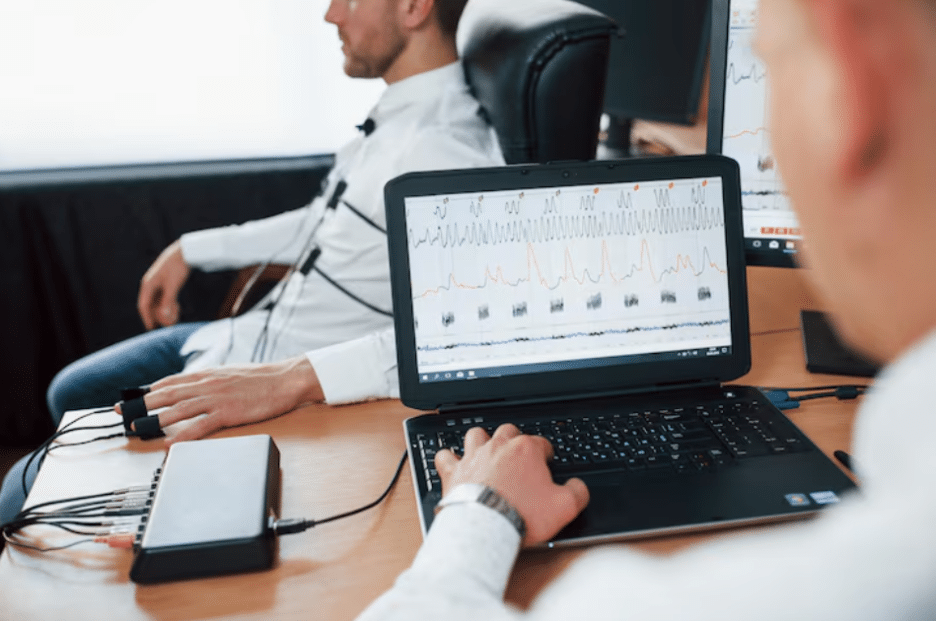
- Polygraphs record physiological responses that trained examiners analyze using validated techniques.
- Proper questions, qualified examiners, and suitable testing conditions support examination quality.
- Polygraph results should be considered alongside other investigative findings.
Financial allegations of misconduct can cause confusion in an organization where there is limited evidence, conflicting information, or when there is a questionable transaction. The Association of Certified Fraud Examiners (ACFE) estimates that occupational fraud costs an organization an estimated 5% of its annual revenue. If issues of money payments, fund misuse, theft, or violations of financial policies are involved, a process that reviews available facts might help resolve the problem.
A polygraph exam or lie detector test might be conducted to investigate certain concerns in a structured fashion. However, a polygraph does not directly determine whether someone is telling the truth or committing misconduct. Rather, it is a scientific diagnostic tool that captures physiology in reaction to a carefully presented set of questions through a validated testing process by a trained examiner.
A polygraph best preserves the integrity of the process when the test is used to address a specific and clearly defined question.
This article clarifies the use of a polygraph in financial misconduct investigations, the procedures for a polygraph, and the factors affecting the quality of a polygraph.
Table of Contents
- Can A Polygraph Examination Be Used for Financial Misconduct Allegations?
- How A Polygraph Examination Measures Physiological Responses
- Importance Of Question Formulation in Financial Misconduct Cases
- What Happens During a Financial Misconduct Polygraph Examination?
- Factors That Influence Examination Quality
- Limitations Of Polygraph Examinations in Financial Investigations
- Conclusion
Can A Polygraph Examination Be Used for Financial Misconduct Allegations?
Financial allegations of misconduct can cause confusion in an organization where there is limited evidence, conflicting information, or when there is a questionable transaction. The Association of Certified Fraud Examiners (ACFE) estimates that occupational fraud costs an organization an estimated 5% of its annual revenue. If issues of money payments, fund misuse, theft, or violations of financial policies are involved, a process that reviews available facts might help resolve the problem.
A polygraph exam or lie detector test might be conducted to investigate certain concerns in a structured fashion. However, a polygraph does not directly determine whether someone is telling the truth or committing misconduct. Rather, it is a scientific diagnostic tool that captures physiology in reaction to a carefully presented set of questions through a validated testing process by a trained examiner.
A polygraph best preserves the integrity of the process when the test is used to address a specific and clearly defined question.
This article clarifies the use of a polygraph in financial misconduct investigations, the procedures for a polygraph, and the factors affecting the quality of a polygraph.
How A Polygraph Examination Measures Physiological Responses

A myth associated with the polygraph is that it tells you whether a person is lying. The instrument captures several physiological responses from examinees while they respond to fixed questions.
The term polygraph means “many writings,” referring to the simultaneous recording of several physiological measurements. These recordings relate to activity in the autonomic nervous system, such as:
- Respiration — changes in breathing patterns.
- Cardiovascular activity — changes related to blood pressure and pulse rate.
- Electrodermal activity — changes in skin conductivity.
- Motion sensor activity — to help identify intentional test distortions.
The examiner is not judging based on a single reaction or by assessment of nervousness alone. Rather, the examiner assesses the physiological responses to the event as a whole by means of validated testing modalities and scoring systems to arrive at a diagnostic opinion.
Importance Of Question Formulation In Financial Misconduct Cases
Designing questions is probably one of the most critical components in any professional polygraph exam. Questions should be clear, focused, and relate to the topic under investigation.
Before testing begins, the examiner conducts a pre-test interview to explain the examination process, review the issue, and discuss every question with the examinee. This way, the examinee will be able to indicate that he or she is aware of what each question asks before the recording of any physiological responses begins.
Questions involving opinions, assumptions about the future, or questions with multiple issues are usually not included in an exam, as they can diminish the effectiveness of an exam. Well-constructed questions enable the examiner to gather relevant physiological information on the aspect being assessed.
What Happens During A Financial Misconduct Polygraph Examination?

The examination process begins with an initial discussion where the examiner reviews the circumstances and determines whether the issue is appropriate for testing.
During the pre-test interview, the examiner explains the procedure, reviews the questions, and addresses any concerns. This stage helps establish clear communication and ensures that the examinee understands the examination requirements.
During the examination, the polygraph instrument records physiological activity while the examinee answers the structured questions. Afterward, the examiner evaluates the recorded physiological responses using validated testing techniques and standardized evaluation methods.
The outcome is a diagnostic opinion based on the complete examination process rather than one individual response or isolated measurement.
Factors That Influence Examination Quality
Several factors contribute to the quality of a polygraph examination, including:
1. Examiner Qualifications
Training, experience, continuing education, and adherence to professional standards help ensure examinations are conducted consistently.
2. Testing Conditions
Physical illness, fatigue, medication use, dehydration, emotional distress, or other conditions may influence physiological recordings. Examiners consider these factors before proceeding.
3. Specific-Issue Format
A clearly defined issue allows the examiner to focus on relevant questions and collect more meaningful physiological information.
4. Validated Testing Techniques
Professional examinations rely on structured procedures and validated techniques to evaluate physiological response patterns.
Limitations Of Polygraph Examinations In Financial Investigations
Although a polygraph examination may provide additional investigative information, it does not independently prove financial misconduct. It does not replace transaction records, documentation, witness statements, or other evidence.
The value of an examination depends on several factors, including properly formulated questions, qualified examiner involvement, appropriate testing conditions, and the use of validated procedures.
Conclusion
A polygraph examination can help evaluate specific financial misconduct allegations when conducted under appropriate conditions and professional standards. However, it does not independently prove wrongdoing or replace other evidence.
With structured procedures, validated techniques, and qualified examiners, a polygraph can provide additional investigative insights.
Connect with Global Polygraph Network to explore professional polygraph services for your specific needs.