
Key Takeaways
- Polygraph testing can help investigators assess credibility when multiple parties provide conflicting accounts of the same event.
- The possibility of a polygraph examination may encourage greater accountability and more accurate disclosures during investigations.
- Polygraph tests can provide additional investigative insight when physical evidence, documentation, or witness testimony is limited.
- Polygraph examinations work best as a supplementary tool and should be used alongside interviews, evidence collection, and professional judgment.
Solving conflicts between two or more individuals is commonly much more complex than it initially seems. You may collect testimonies, look through existing evidence, and question all participants, but still fail to find out which side of the story is true.
In cases where multiple individuals give opposing descriptions, it might be very difficult to establish the facts.
In the meantime, investigations may be more lengthy, costly, and more stressful to all parties involved. Employers, lawyers, investigators, and individuals are frequently left to make critical choices that lack solid answers, particularly when evidence presented does not lean one side over the other.
In these situations, having an additional tool to assess credibility and examine disputed claims can be extremely valuable. This is why many investigators and organizations turn to polygraph testing as part of the fact-finding process.
But now you might be wondering:
“How does polygraph testing support fact-finding in complex multi-party disputes?”
Well, in this blog, we will explore how polygraph testing assists investigators in evaluating credibility, resolving conflicting accounts, and uncovering important information when disputes involve multiple parties.
Table of Contents
- Help Assess Credibility When Stories Conflict
- Encourage Greater Accountability During Investigations
- Provide Additional Insight When Evidence Is Limited
- Support Resolution by Reducing Uncertainty
- Bringing Clarity to Complex Disputes
1. Help Assess Credibility When Stories Conflict
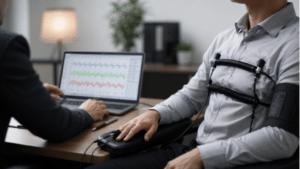
When there are multiple people giving varying accounts of the same incident, it may be quite difficult to figure out which person is telling the truth. In these situations, a professional lie detector test can be used as a supplementary investigative instrument in determining credibility and facilitating the process of fact-finding.
Instead of having to rely on personal opinion or assumptions, investigators may use polygraph testing to gauge answers to well-crafted questions. This method brings an objective aspect to the case where emotions, personal interests, or opposing opinions can affect testimony.
To illustrate, employment conflicts based on theft claims, inappropriate conduct, or violation of policy usually encompass several staff members who present conflicting statements. Likewise, family disputes, relationship conflicts, and civil disputes can have multiple parties with conflicting statements.
Consequently, polygraph testing can assist in refining an investigation. Although it does not displace evidence gathering and professional judgment, it can offer meaningful insights that guide investigators on areas that need to be investigated further.
As a result, decision-makers have more information that can be useful in assessing the credibility of different accounts.
2. Encourage Greater Accountability During Investigations

Complex conflicts are usually hard to settle since parties might be assured that opposing stories cannot be validated. This may result in a situation where misinformation, omissions, or misleading statements make the investigation difficult.
However, the possibility of undergoing a polygraph examination can encourage greater accountability among those involved. The awareness that answers will be analyzed in a well-organized testing approach may encourage people to give more precise and thorough answers in the first place.
Moreover, polygraph testing is conducted in a standardized manner that involves pre-test discussions, explicit questions, and professional administration. This systematic setting assists in minimizing confusion and makes sure that participants get a clear picture of what is under consideration.
As investigations advance, enhanced accountability usually results in better collaboration. Rather than concentrating on accusations and speculation, parties can be more amenable to sharing factual information that may help in enhancing a better understanding of events.
Thus, polygraph testing may be utilized in establishing conditions that might facilitate a more transparent fact-finding procedure.
3. Provide Additional Insight When Evidence Is Limited
Not every dispute produces clear physical evidence. In most instances, the investigators are forced to depend largely on the testimonies of witnesses, their own memories, or oral assertions. Unfortunately, these sources may not always provide definitive answers.
This difficulty is particularly prevalent in cases involving verbal agreement conflicts, personal relations, internal workplace conflicts, or relationship-related claims. When independent evidence is limited, determining what occurred can become increasingly difficult.
Polygraph testing in such cases can be used as an additional source of information that can be used alongside the current investigative work. Instead of replacing the documents, records, interviews, and other evidence, it presents an additional level of analysis, which can help in assessing controversial claims.
This additional perspective can be particularly valuable when key facts remain contested. In fact, a 2021 meta-analysis in Applied Cognitive Psychology analyzed 138 datasets using the Comparison Question Test and discovered that polygraph tests were useful in separating truthful and false answers. These results emphasize the possibility of polygraph testing being a valuable tool in combination with other types of investigations.
Moreover, polygraph tests can assist investigators in determining discrepancies that require additional scrutiny. This would enhance efficiency in investigations because it would focus on areas that require further clarification.
Consequently, organizations and individuals are able to access information which would otherwise be hard to evaluate. Although no investigative tool can be applied in isolation, polygraph testing can assist in providing valuable information where evidence does not provide enough clarity.
4. Support Resolution by Reducing Uncertainty

One of the most significant challenges in multi-party disputes is uncertainty. When conflicting narratives persist, parties often struggle to move forward. Delays increase, trust declines, and disagreements may continue long after the original incident occurred.
Polygraph testing can help reduce this uncertainty by providing additional information that supports the overall fact-finding effort. Although the results should be considered alongside other available evidence, they may help clarify disputed issues that have remained unresolved.
Moreover, obtaining greater clarity often benefits everyone involved. Organizations can make more informed decisions. Legal professionals can strengthen their investigative process. Families and individuals can gain information that helps address ongoing concerns.
Bringing Clarity to Complex Disputes
Complex multi-party disputes often involve conflicting statements, limited evidence, and significant uncertainty. As these challenges grow, establishing a clear understanding of the facts becomes increasingly important.
Polygraph testing supports this process by helping assess credibility, encouraging accountability, providing additional investigative insight, and reducing uncertainty during fact-finding efforts. While it should be used alongside other investigative methods, it can offer valuable information that helps clarify disputed events.
When multiple perspectives compete for attention, a structured and professional polygraph examination can serve as a useful tool in the pursuit of truth, helping organizations and individuals make more informed decisions based on a stronger understanding of the facts.