

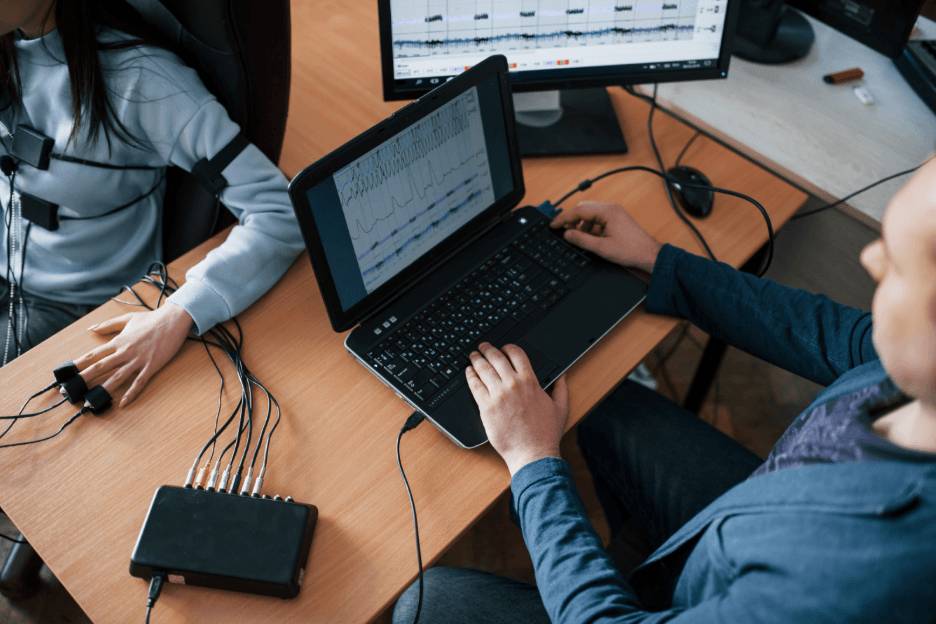
If you’re planning to take a lie detector test, it’s natural to have several questions racing through your mind.
For instance, most people often wonder about the role of stress and anxiety in polygraph outcomes. The prospect of failing a lie detector test may also cause great worry, especially if your name and reputation are on the line.
To settle these concerns, you’ll need to understand how the polygraph process works. That includes researching the industry’s standards on question framing, sequence, and timing.
We’ve prepared a definitive guide to the number, sequence, and timing of polygraph questions, and how these factors impact test results.
How Many Polygraph Questions to Ask?
Contrary to the misconception, polygraph testing is a lot different from conventional detective-style interrogations.
Detectives may ask dozens of questions in a single session. In contrast, most polygraph exams require a few interconnected questions. The actual number depends on the specific lie detector test you’ve scheduled.
1. Single-Issue Exams
Single-issue polygraphs seek to resolve specific incidents, such as theft within families.
The American Polygraph Association (APA) considers single-issue exams as the most accurate lie detector tests, capable of achieving 95%+ accuracy. It’s also the only format that satisfies the Daubert standard for evidence admissibility.
Most single-issue exams ask just one question. However, the question may be framed differently and asked multiple times.
2. Multi-Facet Exam
Multi-facet exams involve asking multiple queries concerning the same topic. If the examinee fails just one of these interconnected questions, they’re likely deceptive.
3. Multiple-Issue Exam
Also called exploratory exams, multiple-issue polygraphs seek to address up to four distinct but closely related questions. These tests typically target more complex issues requiring Relevant and Control questions.
Again, failing just a single question implies failing the entire test.
4. Statement Verification Exam
A statement verification exam is administered to validate the credibility of a written statement. It’s the most common format used in therapeutic settings.
Rather than query the examinee about specific facts in their disclosures, examiners usually ask all-inclusive questions like ‘Did you lie about anything in the disclosure statement?’ 1 – 3 questions often suffice.
5. Screening Exams
Screening exams help screen job applicants or test ongoing honesty. They’re common in law enforcement and intelligence circles, often administered to minimize national security threats.
Screening exams may delve into multiple aspects of the examinee’s life, including their;
- Residence history
- Overseas travels
- Social media activity
- Previous arrests
- Credit history
However, to improve the test’s accuracy, the cumulative number of questions should be no more than 4.
Why Ask Fewer Questions?
Asking a few polygraph questions reduces the strain on an examinee’s nervous system, minimizing physical and mental fatigue. It also prevents habituation.
Habituation occurs when a polygraph examinee quits reacting naturally to lie detector questions because they’ve become too accustomed to the stimulus.
Besides, fewer questions ensure polygraph tests comply with the industry’s duration of 1 ½ – 2 ½ hours. If an exam is significantly shortened, an examinee may challenge the outcome’s validity, citing noncompliance with the laid-down guidelines.

Typical Polygraph Question Sequence
1. Irrelevant Question
Irrelevant questions are non-stressful, general-knowledge queries, such as;
- Is your name Tom?
- Is today Thursday?
- Are you in a room?
The first irrelevant question helps reconfirm the examinee’s physiological baselines.
2. Relevant Question
Relevant questions target the specific issue directly.
The first query in this series is often tagged a sacrifice question and ensures the examinee understands the matter at hand. An example would be – “On the theft of Tiffany’s jewelry, do you intend to answer truthfully?”
This first question isn’t typically scored.
3. Control (Comparison) Question
Comparison questions revisit past offenses somewhat related to the current issue, designed to elicit stronger physiological reactions in truthful examinees.
Examples;
- Have you ever stolen from your parents before?
- Have you secretly visited an adult website while married to your current partner?
After the first three questions, the cycle repeats from Relevant to Control until an examiner exhausts the list of queries. Irrelevant questions may be posed in between to offer reprieve after a series of intense questioning.
Examiners may also inquire about the potential use of countermeasures.
Standards on Question Spacing
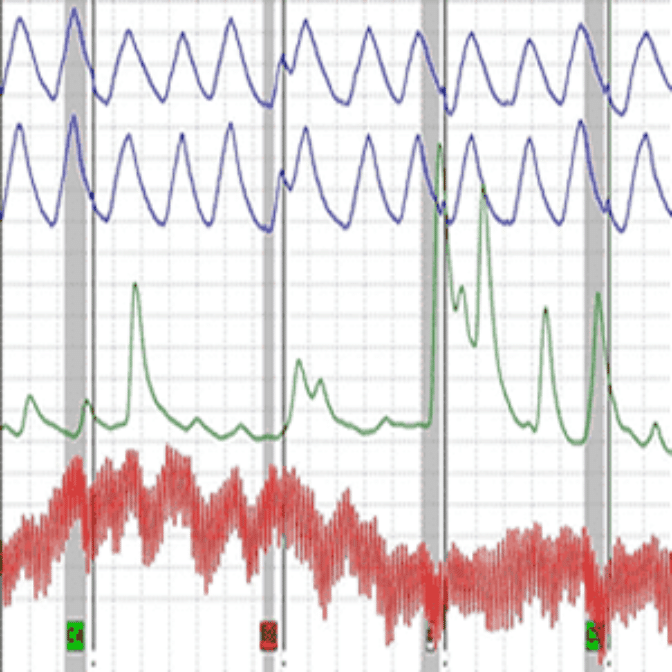
According to industry guidelines, examiners should space polygraph questions 20 seconds apart. This helps restore the examinee’s physiological state to the baseline.
Asking questions back-to-back can impact the examinee’s thought process, triggering artifacts that might be misconstrued as deception. It creates a spill-over effect that may cause neutral answers to appear deceptive.
If an examinee is visibly anxious after 20 seconds have elapsed, an examiner may ask a series of Irrelevant questions to fully restore their baseline.
Most importantly, examinees can determine whether to carry on with the test or cancel it. Potential grounds for cancellation include;
- Evidence that the examinee used countermeasures
- Emotional meltdown due to intense anxiety
- Examinee confesses to the offence (such must be documented by a video recording)

Final Thoughts
The number, sequence, and timing of polygraph questions can impact the test’s outcome significantly. If you bombard an examinee with back-to-back questions with no reprieve in between, they may become anxious and project deception-linked physiological arousal even when they’re innocent.
Similarly, polygraph questions must follow a well-structured sequence. Examiners should ask Control and Relevant questions alternately rather than separately. This way, the test retains its purpose as a truth-seeking tool and not a confession-exacting ritual.
Working with a professional examiner is the surest way to address polygraph question design challenges. Insist on someone who graduated from an APA-accredited school, who understands the industry’s guidelines on framing lie detector questions.