


Most polygraph exams are one-time evaluations designed to aid specific investigations or support screening processes. Once the test yields a Deception Indicated (DI) or No Deception Indicated (NDI) verdict, the examiner shares the findings with their clients for necessary action.
However, there are instances where polygraph exams must be repeated multiple times.
A classic example is the Personnel Evaluation Exam designed to verify employees’ ongoing honesty. There’s also Post-Conviction Sex Offender Testing (PCSOT), intended to evaluate whether a parolee complies with their parole terms and if they pose a further threat to their communities.
Where repeat polygraphs are necessary, examiners must ensure the tests follow industry standards for frequency. Scheduling lie detector tests too closely may lead to habituation.
Here’s a look at what habituation entails and how this phenomenon can impact the credibility of polygraph exams.
What Is Habituation?
Habituation is a phenomenon in polygraphs in which an examinee is subjected to repeated polygraph questions too frequently, diminishing their physiological responses. To better understand how habituation comes about, we must first familiarize ourselves with what a lie detector test measures.
Polygraphs monitor deception-linked physiological arousal. The technique borrows from the theory that lying arouses the Autonomic Nervous System (ANS), causing marked changes in heart rate, blood pressure, respiration, and perspiration.
Modern polygraph instruments also utilize motion detectors. This provides examiners with additional artifacts, ensuring a more credible test.
Now, a normal person should exhibit marked physiological changes when responding to lie detector questions. Habituation occurs when an examinee has to respond to similar questions too frequently.
Understanding Polygraph Retests and the Role of Habituation
Repeat polygraph tests may be scheduled for several reasons, including;
- Examinee challenges the test outcome
- Need for peer reviews
- Unforeseen events, such as polygraph instrument malfunctions
- Periodic tests
Habituation typically pertains to periodic exams, such as PCSOT tests.
According to the American Polygraph Association (APA), repeat polygraph tests should be scheduled at least 6 months apart. That’s particularly if the subsequent evaluations involve asking similar lie detector questions.
Spacing lie detector tests too close together can diminish the examinee’s physiological reactions even if they’re being deceptive.
Sure, the polygraph instrument may still record significant deviations from baselines with each response to in-test questions. However, the data becomes less pronounced with every subsequent test, making it extremely challenging to draw accurate inferences.
Multiple studies have revealed that central stress systems can habituate when repeatedly exposed to similar psychosocial stimuli. Fortunately, examiners can implement certain techniques to minimize the impact of habituation.
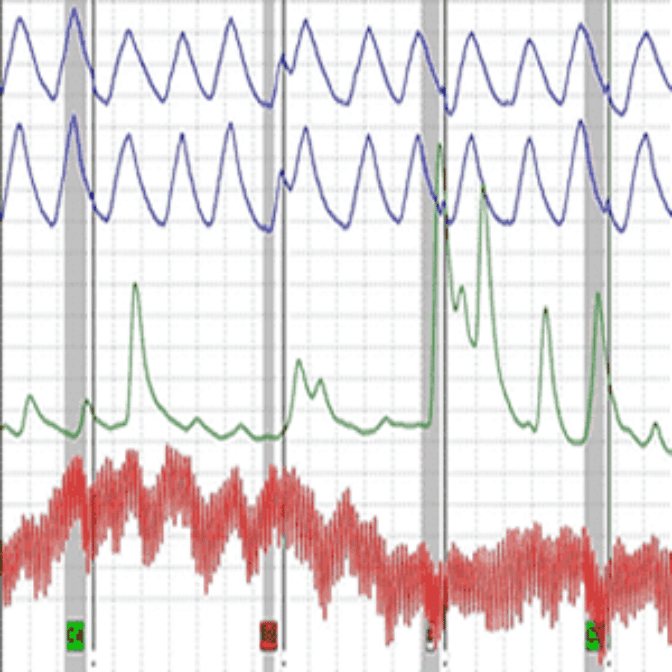
Symptoms of Habituation in Polygraph Tests
- Decreased reaction magnitude – Physiological arousal to in-test questions is smaller than baselines
- Slow reaction return – An examinee’s body takes longer to return to its physiological baseline
- Consistency in responses – Lack of clear distinctions between responses to Relevant and Control questions
- Flattened polygraph data – Evidenced by a monotonous chart
How to Manage Habituation in Polygraph Tests
1. Subject Examinees to Robust Pre-tests
Pre-tests are a critical stage in a lie detector test, designed for rapport building. During this phase, an examiner discusses the test with the examinee and explains how the procedure works.
Other critical events include;
- Recording an examinee’s physiological baseline data
- Performing an acquaintance test
- Calibrating the polygraph instrument
- Drafting and mutually reviewing the in-test questions
- Reconfirming consent
Conducting an extensive pre-test isn’t merely about compliance with industry standards. Examiners can also utilize this opportunity to evaluate signs of habituation, helping determine whether to proceed with a test or cancel it altogether.
However, ensure the pre-test phase isn’t overly drawn-out. The entire polygraph process should ultimately last 1 ½ – 2 ½ hours.
2. Reorder Questions
When conducting periodic lie detector tests, examiners often ask identical questions. It provides clients with a more objective analysis of an examinee’s honesty and consistency.
To avoid habituation, examiners may consider reordering the questions. This can introduce an element of surprise and distort the brain’s pre-established pattern of the sequence of questioning.
As such, physiological reactions become more natural rather than linked to biased sequences.
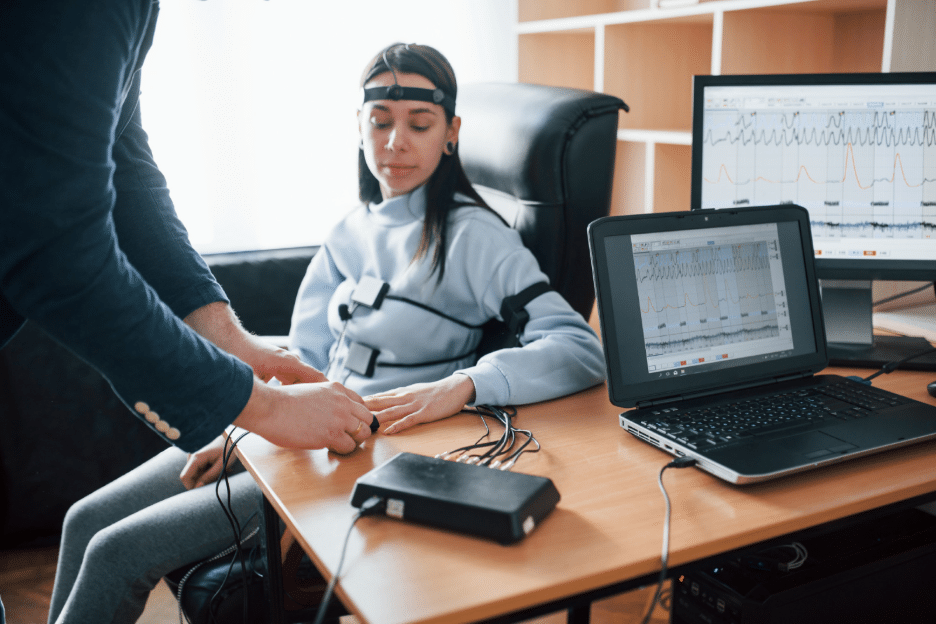
3. Incorporating Variations
If reordering questions is challenging, examiners may consider incorporating nuances.
Assume that a Federal Bureau of Investigation (FBI) agent has previously undergone multiple countersurveillance exams. In all the tests, one of the questions has been “Have you ever disclosed your alias to anyone outside the Bureau?”
An examiner may modify this question to “Does anyone besides authorized personnel know your pseudonym?”
4. Controlled Timing
The APA requires spacing polygraph questions about 20 seconds apart. It prevents the physiological arousal to certain questions from spilling over into the next, causing an inaccurate chain of reactions.
Even if an examinee responded nonchalantly to a polygraph question, they must fully reset to their physiological baselines in readiness for the next question.
Allowing for generous timing is particularly important when transitioning between Relevant and Control questions.

Managing Habituation With Professional Polygraph Tests
Habituation is one of the biggest threats to the accuracy of frequently scheduled lie detector tests.
When polygraph exams are spaced too close together, examinees become too accustomed to the process. This can diminish the magnitude of their physiological responses to repeated questions and impact the test’s credibility.
Examiners must stick to the industry standards on polygraph frequency. Unless there are compelling reasons to the contrary, periodic lie detector tests should be spaced at least six months apart.
Examiners can also deploy certain techniques to manage habituation during polygraph exams. Reordering the questions and incorporating subtle nuances can eliminate monotonous patterns, potentially triggering proportionate physiological responses.