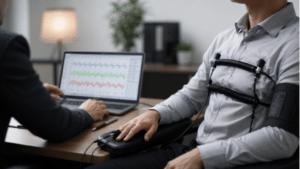

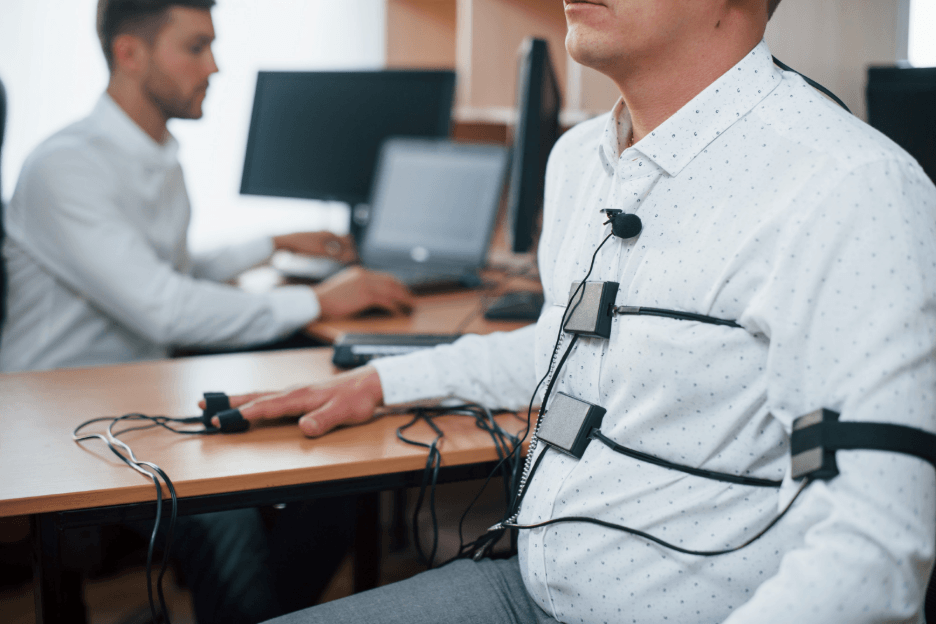
Examiner subjectivity is a leading cause of failed polygraph tests. When a polygrapher takes on a personal approach rather than relying on objective data, the test’s outcome becomes invalid and unreliable.
The American Polygraph Association (APA) publishes standards that examiners should follow while administering lie detector tests. These guidelines span the full process, from pre-test interviews to post-test data analysis.
Therefore, working with an APA-certified polygrapher is the first step in minimizing examiner subjectivity.
Read on as we examine examiner subjectivity and how to overcome it.
What Is Examiner Subjectivity?
Examiner subjectivity occurs when a polygrapher relies on their personal, often-skewed opinions while conducting a lie detector test. While subjectivity generally applies to data interpretation, some examiners may approach the entire test with preconceived opinions.
Note that polygraph test outcomes should rely exclusively on physiological arousal recorded by the lie detector instrument. Although an examiner may use their best judgment to detect inconsistencies and potential deployment of countermeasures, they cannot make decisions purely on a hunch.
Understanding the Polygraph Process
The lie detector test unfolds in three stages, each involving critical procedures:
Pre-test Phase
- Rapport-building between examiner and examinee
- Performing an acquaintance test to calibrate the polygraph instrument
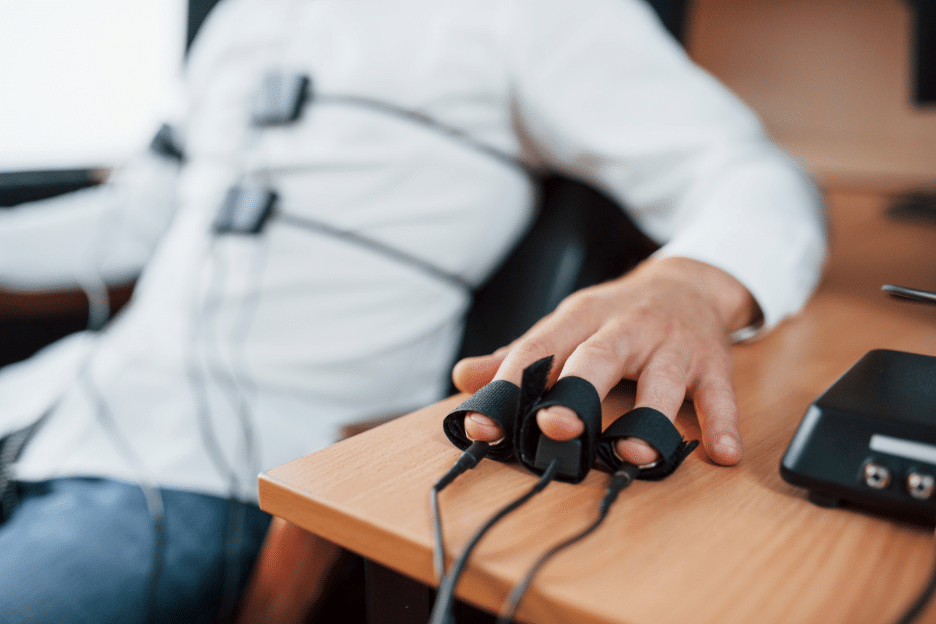
- Examiner attaching the polygraph sensors to examinee’s body and asks neutral questions to record the examinee’s physiological baseline
- Examiner explaining the procedure and coming up with the test questions
- Both parties going over the questions before they’re fed into a computer system
In-test
- Examiner poses a series of Relevant and Control questions, each requiring direct, unqualified answers.
- The polygraph instrument records the examinee’s responses in real-time
- Examiner monitors for the use of countermeasures
Post-test
- Examiner asks the examinee to explain some of their responses
- Examiner analyzes the polygraph findings
- Final scoring is given
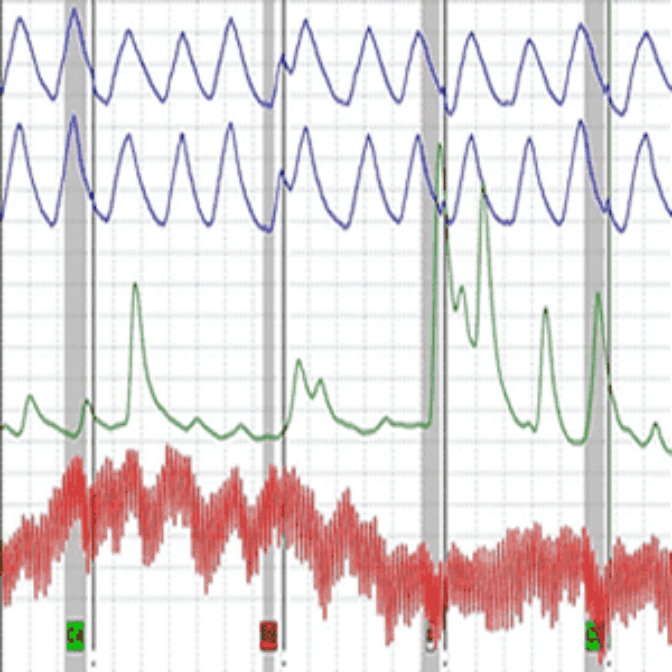
Most polygraph exams produce Deception Indicated (DI) or No Deception Indicated (NDI) results. However, certain tests may yield inconclusive (INC) outcomes, indicating insufficient data to make credible inferences.
How Does Examiner Subjectivity Present?
- Prejudicial pre-test interviews
- Racial and ethnic bias
- Aggressive interview styles
- Improper question design – Asking leading, incriminatory, or emotionally arousing questions.
- Confirmation bias – Examiners focus on outcomes that feed into their initial hypothesis
- Emphasis on Control questions while discounting Relevant questions
- Ignoring obvious countermeasures and misjudging normal artifacts as countermeasures
- Interpreting all nervous symptoms as evidence of deception
Tips for Minimizing Examiner Subjectivity
1. Emphasizing the Presumption of Innocence
Industry guidelines mandate polygraphers to treat examinees as innocent until proven guilty. Therefore, examiners should use lie detectors as truth-seeking tools rather than to extract confessions.
A subject’s ethnic and social background cannot be used against them. Examiners must proceed objectively, even if primary evidence already incriminates the examinee.
2. Recording Accurate Baselines
Baselines refer to an examinee’s normal physiological state, typically recorded by asking an examinee non-stressful questions during the pre-test phase.
Different people have different physiological dispositions. Therefore, accurate baseline data is essential to administering a credible polygraph test.
Baselines enable examiners to;
- Understand and examine an examinee’s stress threshold
- Compare responses to in-test questions more accurately
- Better account for artifacts, such as coughing and sneezing
3. Performing Acquaintance Tests
Acquaintance testing, also called the stimulation (Stim) test, is a mock exam designed to calibrate the polygraph instrument.
A Stim test can assume several forms. The most common one is the card test, which unfolds as follows;
- Examiner connects the polygraph sensors to the examinee’s body.
- The examiner issues one card from a deck to the examinee and notes down its number.
- Examiner asks the examinee about the card they chose, requiring them to answer “No” to every question.
- The machine records all physiological responses in real-time.
Besides helping with polygraph calibration, Stim tests may also provide useful baseline data.
4. Following Proper Question Design Formula
Polygraph questions should be open-ended, requiring flat ‘Yes’ or ‘No’ responses. Examiners shouldn’t prod the subject for narrative explanations simply to justify their preconceived opinions.
While Control questions are allowed, they must relate to the case under investigation.
Assume that an alleged home burglar has willfully submitted to a lie detector test. Rather than query them generally about past offenses (including traffic violations), examiners should focus on any previously reported burglaries.
Besides, examiners may consider the Non-Exclusive Comparison Technique while evaluating Relevant questions. Other best practices for framing polygraph questions include;
- Using a non-accusatory tone
- Framing questions clearly and unambiguously
- Taking a second break between questions
5. Using APA-validated Scoring Techniques
The APA has published guidelines for scoring polygraph results, including;
7-Position Scoring System
This methodology uses a scale from +3 to -3. Positive scores indicate truthfulness, negative scores suggest deception, while 0 is inconclusive.
3-Position Scoring System
A simpler version of the 7-position technique, the 3-position scoring system uses a scale ranging from +1 to -1.
ESS
The Empirical Scoring System (ESS) is an evidence-based numerical hand-scoring technique that uses a 3-position scale to compare the responses to in-test Control and Relevant questions. It’s designed to minimize polygraph error rates by heavily weighting electrodermal activity readings.

Minimizing Examiner Subjectivity by Choosing Certified Professionals
Examiner subjectivity doesn’t only manifest during the pre-test interviews. It can also present during in-test questioning and post-test data analysis, significantly altering lie detector test’s credibility.
When your name or reputation is on the line, the last thing you want is a polygraph examiner driven by a hunch. Your best bet is to select a certified professional.
Insist on someone who graduated from an APA-approved polygraph school and has at least five years of active practice. If your state issues polygraph licenses, ensure the examiner possesses relevant state-issued licenses.