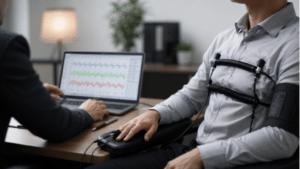

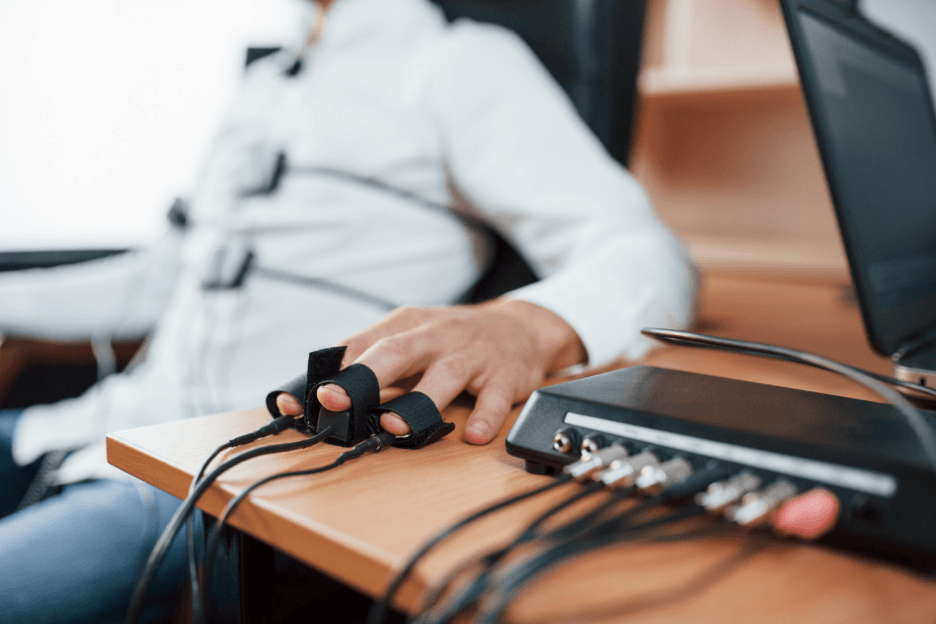
Although lie detectors measure physiological arousal, their accuracy depends on an examinee’s memory. Memory recall can shape the outcome of polygraph exams, as these tests measure physiological responses triggered by conscious knowledge.
Experts believe that certain brainwaves, such as P300, can enhance polygraph accuracy by revealing concealed knowledge. But this only applies to conscious memory.
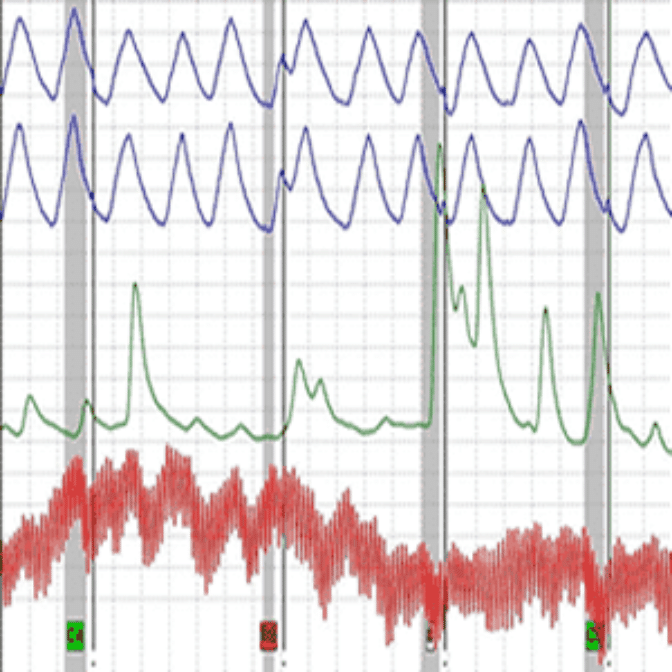
When an examinee deliberately suppresses the truth, the falsehood registers as a cognitive threat. The brain immediately marshals up defenses to cover up the lie, including signaling the autonomic nervous system (ANS) arousal. This causes variances in heart rate, blood pressure, skin conductivity, and respiratory depth and volume.
Similarly, memory lapses can impact polygraph outcomes. If an impairment is due to full-blown cognitive issues like false memory syndrome (FMS), professional examiners may disqualify subjects from undergoing lie detector tests altogether.
Read on as we dissect the role of memory recall in shaping polygraph test responses.
Understanding the Brain and Truth Suppression
Not only is the brain involved in deception. It plays the biggest role in terms of initiating truth suppression and defending a lie after the fact.
So, while a polygraph test measures physiological arousal, understanding an examinee’s cognitive state can help improve the outcome.
Studies investigating spontaneous deception have shown that several brain regions are responsible for truth suppression, with the prefrontal cortex playing the biggest part.
When you spin a falsehood, your prefrontal cortex inhibits hippocampal activity to desensitize you from the natural emotional and physiological responses associated with deception.
However, it’s impossible to fully block these reactions when you lie consciously. That’s where memory recall comes in.
Exploring the Brain and Memory Control
The brain regulates memory recall. Which means, it can block unwanted memories and enrich desirable ones.
In fact, the brain can remove unwanted memories altogether. That’s why some people are able to heal from traumatic experiences much faster.
Research shows that people can consciously dampen undesired memories by inhibiting the brain circuits that initially stored the information. Again, the prefrontal cortex plays a critical part in initiating and supporting forgetfulness.
To fully explore the brain’s role in memory recall, we should understand how the human memory is organized.
1. Episodic Memory
Episodic memory stores specific autobiographical events. It relates to the events that happened to your (or someone else’s) life, including when, where, and sometimes why they occurred.
2. Semantic Memory
This memory deals with general world knowledge. The stored information is typically independent of autobiographical experiences.
3. Working Memory
Working memory holds information momentarily, manipulating certain facts before committing them to long-term memory.
4. Procedural Memory
This memory type relates to personal skills and lifestyle habits. Commonly stored information includes daily routines, behavioral competencies, and work concepts.
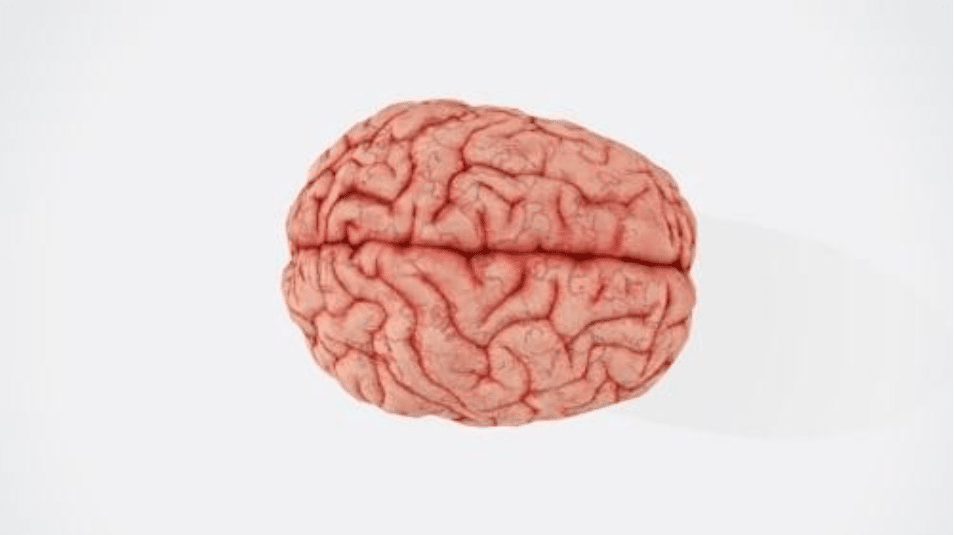
Polygraphs and Memory Recall: Unpacking the Intersection
While polygraph outcomes rely on all memory types, episodic memory plays the biggest role.
Lie detector questions delve into specific past events, prompting an examinee to revisit the incident and fetch relevant information. The subject must vividly remember the case in question to respond objectively. More importantly, they must recall their role in the event.
A deceptive examinee may choose to lie about their involvement in the incident. But, as long as their memory is intact, they won’t fool a professionally administered lie detector test.
Here are the roles of other memory types during polygraph exams;
- Semantic Memory – Can impact how an examinee interprets polygraph questions
- Working Memory – Responsible for processing questions and managing in-test emotions
- Procedural Memory – Can come in handy for tests investigating habitual behaviors like substance abuse
What Happens During Memory Impairment?
Since memory recall impacts polygraph outcomes, impaired memory can have devastating consequences.
Episodic memory must be intact for an examinee to consciously remember information. When this memory is distorted, the subject can lie without their physiological responses synonymous with deception.
Remember that the brain will only trigger ANS arousal when we consciously lie. Impaired memory can cause examinees to believe their false responses, exerting no cognitive load. Without the subject experiencing the “fight-or-flight” response, the polygraph instrument may not register significant deviations from physiological baselines.
Investigating Memory Impairment With Pre-test Interviews
To establish memory impairment, examiners should subject examinees to rigorous pre-test interviews. The pre-test phase enables polygraphers to build a rapport with examinees and explain the testing procedure.
Besides, examiners can utilize the opportunity to uncover hints of memory impairment. Common causes of memory lapse include;
- Traumatic events
- Substance abuse
- Medical conditions, particularly degenerative cognitive disorders
- Old age
If an examinee cannot confidently affirm or deny facts related to the incident in question, the test may be called off altogether.

Interlink Between Memory and Physiological Responses in Polygraph
Memory recall plays a vital role in shaping the outcome of polygraph exams. When you willfully suppress the truth, your brain immediately triggers a raft of physiological reactions, including those measured by a polygraph instrument.
However, this strictly applies to conscious memory. Examinees with memory-impairing disorders like FMS may lie without experiencing significant ANS arousal because their reality is distorted.
We should also underscore that polygraph tests rely overwhelmingly on episodic memory. Besides recalling the specific event in question, examinees must also understand their role in the said incident.
To effectively address memory impairments in polygraph tests, there’s a need for robust pre-test interviews.
Examiners must also prepare examinees adequately to minimize genuine forgetfulness during in-test questioning. Moreover, the questions should be clear and precise, focusing on honest recollection of the matter at hand.