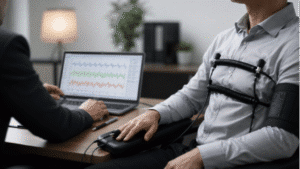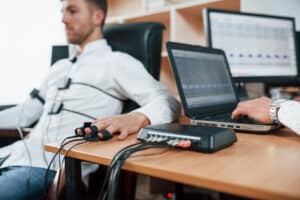

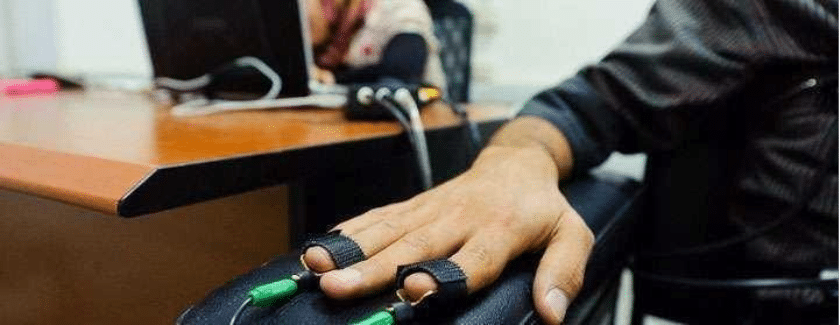
Most people associate lie detector tests with criminal investigations.
Indeed, the first image that often comes to mind when we think of polygraph exams is a polygrapher engaging a crime suspect in a Q&A session. The subject is usually a suspected child molester, serial killer, or petty offender.
This association is not accidental. For decades after its invention, the polygraph was used almost exclusively in detective work.
In fact, the very first lie detector instrument was deployed in criminal investigations. After inventing the polygraph in 1921, John A. Larson used his new-fangled device during the investigation of murder suspect William Hightower.
Law enforcement still accounts for most polygraph tests. However, the technique has since pervaded many other sectors.
Here’s a rundown of some fascinating non-investigative applications of lie detector tests.
1. Intelligence Surveillance
The United States intelligence community is constantly working to thwart surveillance activities. It’s a proactive measure to prevent our security systems from infiltration by hostile actors, such as terrorist sympathizers.
For years, the US intelligence organs remained tight-lipped on their deployment of polygraph exams as part of routine countersurveillance activities. But not anymore.
Recently, the Federal Bureau of Investigation (FBI) admitted to using polygraphs to pinpoint sources of information leaks. The agency subjects its staffers to routine lie detector tests to sniff out spies long before they can jeopardize national security.
2. Resolving Relationship Disputes
No marriage is perfect. Partners occasionally fight, sometimes over serious allegations like infidelity.
Polygraphs have proven instrumental in resolving cheating allegations. By submitting to a lie detector test, the accused spouse can prove they’re faithful. The findings may help reassure the suspicious partner, providing them with emotional closure.
Some grounds for requesting lie detector tests in relationships include;
- Cheating occurred before, and the aggrieved partner wants reassurance
- There’s circumstantial evidence, such as multiple recent contacts with ex-partners
- Doubts keep mounting without sufficient proof of infidelity

3. Defense Contracting and Clearance
The United States Department of Defense (DoD) is the world’s most heavily funded defense agency. To fulfill its supply needs, the DoD regularly opens up tenders to the general public.
Prospective DoD contractors must meet certain stringent requirements to ensure they can be trusted with sensitive defense information, notably Federal Contract Information (FCI) and Controlled Unclassified Information (CUI). Part of the screening usually involves administering lie detector tests.
Besides, the DoD uses polygraphs periodically to reevaluate security clearance privileges.
4. Sexual Offender Monitoring
Paroled sex offenders often undergo Post-Conviction Sex Offender Testing (PCSOT) to ensure they comply with their parole conditions, with the findings often informing the decision to release or detain them further. PCSOT’s overarching goal is to establish if a parolee poses a significant threat to the community.
The American Polygraph Association (APA) and the American Society for Testing and Materials (ASTM) outline industry standards for polygraphing sex offenders. According to requirements, all PCSOT exams must be conducted by qualified examiners with specific certifications.
Besides, examiners must administer specific PCSOT tests to establish if examinees deployed countermeasures.
Polygraph countermeasures are manipulative techniques used by some examiners to beat a lie detector test. They may assume varied forms, including;
- Physical, such as tongue biting and muscle tensing
- Mental, such as thought suppression
- Pharmacological, such as using antidepressants
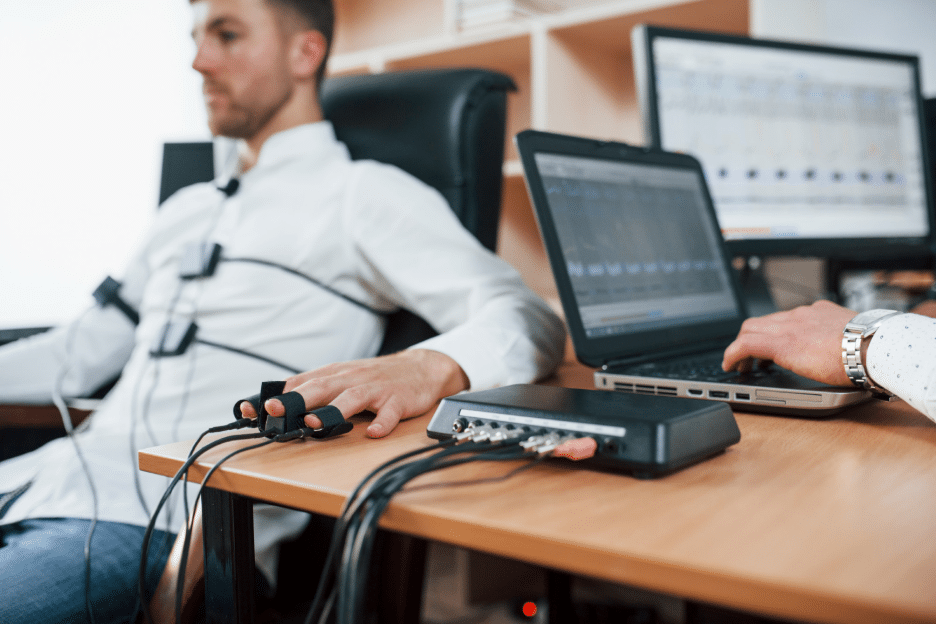
5. Sports Testing
Doping is the bane of modern sporting competitions. Despite advancements in screening technologies, many athletes still use performance-enhancing substances in a bid to game the system.
Polygraphs came as a welcome relief for sporting federations seeking to level the playing field. While the technique may not uncover forensic traces of doping, it can serve as an effective deterrence tool.
The World Natural Bodybuilding Federation (WNBF) pioneered the use of lie detector tests in sports, restoring the credibility of a sport once riddled with rampant doping allegations. All returning WNBF athletes undergo procedural polygraph screening. The prospect of failing a lie detector test is, itself, sufficient deterrence.
Besides, polygraphs can uncover a history of doping long after drug metabolites disappear from an athlete’s system. Someone who used performance-enhancing drugs a decade ago may still fail a polygraph test.
6. Employment Screening
The U.S. Employee Polygraph Protection Act (EPPA) bars most private sector organizations from conducting mandatory lie detector tests on their employees. According to EPPA, employers cannot forcibly deploy polygraphs during job screening or to investigate workplace incidents.
But there’s an exception to the rule. All federal agencies are outside of EPPA’s scope. The Act also exempts certain special service providers, such as pharmaceutical companies.
Prospective law enforcement employees undergo a polygraph evaluation known as LEPET (Law Enforcement Pre-Employment Polygraph Test). Using findings from LEPET exams, recruiters can weed out genuine job seekers from posers, potential spies, and applicants with questionable criminal pasts.
LEPET questions typically target the following areas;
- Academic qualifications
- Professional background
- Criminal history
- Foreign ties
- Residential history
- Drug usage
- Credit rating
- Social media activity

Underscoring Examiner Role in Lie Detector Credibility
Polygraphs became immensely popular for their widespread application in law enforcement. However, the technique has helped sniff out liars in various non-investigative scenarios.
While lie detector findings typically don’t constitute probative evidence, they may support primary evidence in proving the subject’s guilt or innocence. The outcome can help redeem a tainted reputation and restore fractured relationships.
Despite what’s at stake, it’s best to work with a qualified polygraph examiner.
Seek out someone who graduated from an APA-certified college and has at least 5 years of active practice. Even better if the examiner possesses additional training relevant to the lie detector test in question.