


There is hardly a worse feeling than to have to contend with the accusation of an action you did not commit. Whether the accusation is made at the workplace, in a family, or in a court of law, the harm may have been done way before the truth is known. Reputations are damaged, relationships are strained, and stress grows as the facts remain unknown.
Read more: When Polygraph Tests Prevent Wrongful Accusations: Real-World Scenarios And LessonsIn most instances, it is not the proving of guilt but the avoidance of an erroneous assumption becoming a definite narrative. Formal verification instruments can help in this scenario. Properly conducted polygraph tests have served to shed light on the controversial facts and break the cycle of false charges.
The article examines the real-life cases where polygraph tests have helped prevent false allegations or helped to clarify disputed facts, and the lessons that can be learnt from those instances.
1. Workplace Investigations and False Blame
In the case of workplace disputes, allegations tend to move faster than evidence. When theft, misconduct, or policy violations do occur, employers can feel pressure to act quickly. Unfortunately, that urgency can cause the wrong person to be blamed.
In cases of documented workplace investigations, employees have volunteered to take a lie detector test to resolve specific allegations. This moves the process from assuming to verifying by directing attention to the issues that are defined and not the dynamics of the workplace or speculation. As a result, suspicion can be narrowed, and decisions made more evidence-driven.
According to a meta-analysis that was published in Applied Cognitive Psychology, polygraph tests are more consistently accurate when focusing on narrowly defined issues as opposed to broad or exploratory questioning. This supports the need to have structured testing in trying to prevent hasty conclusions during internal investigations.
2. Domestic and Family Disputes Escalating Too Quickly
Family-related accusations often have emotional weight that can cloud judgment. Disputes that involve dishonesty, financial misuse, or personal misconduct can continue to escalate quickly, especially if trust has already been lost.
In certain cases, people have agreed to polygraph testing in order to resolve a specific contested claim instead of going back years into a history of unresolved conflict. By having one clear issue to work on, testing helped de-escalate disputes that were heading toward legal action or permanent estrangement.
The takeaway is clarity. When the accusations are separated and directly analyzed, families are more ready to move on without adding to the emotional damage.
3. Criminal Investigations and Early Suspect Elimination
Wrongful accusations in criminal investigations begin with proximity and not proof. Being present at the wrong time or connected to the wrong person can put someone under intense scrutiny.
Polygraph testing has been employed as part of multiple investigations to help reassess early investigative presumptions, especially where a suspect had been suspected due to being near a crime scene rather than because of evidence presented. In certain cases, positive results on polygraph tests contributed to decisions to deprioritize some people so that investigators could redirect their time and resources to more viable leads.
This is consistent with broader criminal justice findings. An analysis published by the National Institute of Justice noted that early elimination of innocent suspects improved the efficiency of the investigation and avoided the potential for tunnel vision.
The lesson here is not about replacing the investigative work, but refining it. When used responsibly, polygraph testing will prevent innocent persons from being entangled longer than necessary.
4. Financial Disputes and Claims of Fraud

Financial accusations also spread very fast because money causes a feeling of urgency and fear. Allegations of embezzlement, unwarranted expenditure, or financial malfeasance are often informed by the lack of full records or misconstrued transactions.
In certain cases, polygraph testing has been used to draw the line between those who knowingly committed the crime and those who simply misunderstood complicated financial systems or processes. Through the analysis of intent, in a systematic framework, this method has sometimes helped in conflict resolutions with minimal escalation and loss of reputation.
Structure Matters More Than Assumptions
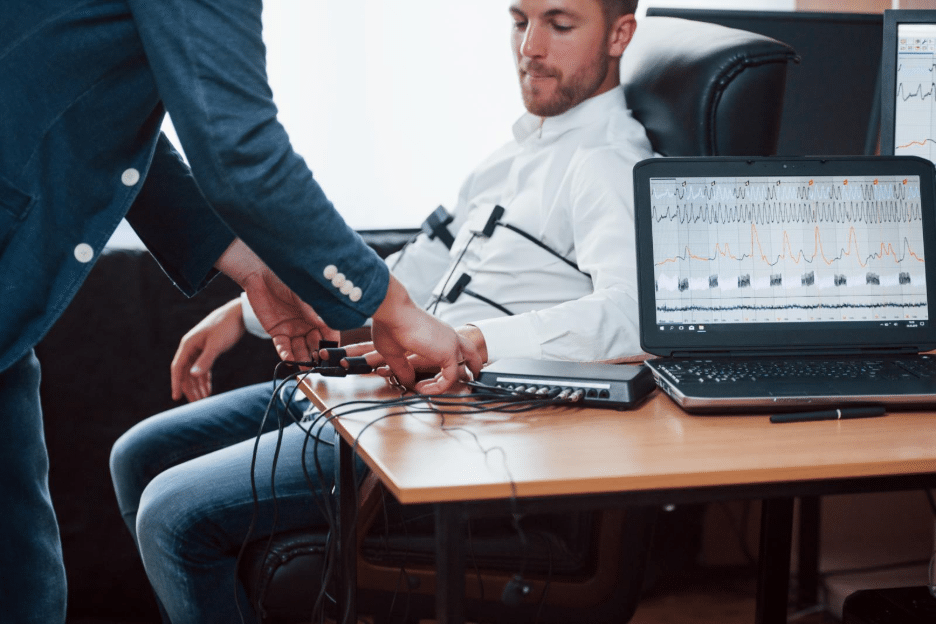
Throughout all these scenarios, though, there is one theme that holds: structure is important. Polygraph testing is a well-defined process that involves informed consent, well-chosen questions, and evaluation of issues.
This structure is critical because wrongful accusations often build upon vague or poorly defined claims. When allegations lack clarity, conclusions become less reliable. Clearly defined test issues and structured questioning help reduce interpretive ambiguity and keep the focus on the specific allegation under review.
Lessons for Individuals Facing Accusations
If you are in a position of being charged, the first reaction can be to be emotional or defensive. However, in real-life examples, it is noticed that calm and methodical responses are often better.
Voluntary participation in a polygraph examination may, in some circumstances, signal transparency when used to address a clearly defined claim. However, testing should never be rushed or compelled. The process must be fully explained, informed consent obtained, and the scope of questioning clearly understood.
Conclusion
Wrongful accusations never start with malicious intentions. More often, they are grown out of incomplete information, emotional pressure, or rushed conclusions. Real-life cases have shown that when polygraph testing is used responsibly and within appropriate limits, it can contribute to breaking cycles of assumption and speculation.
By adding structure, clarity, and focus, polygraph examinations have helped avoid assumptions from adding long-term harm. Understanding these lessons, you can keep a healthy perspective on polygraph testing, not as a shortcut to the truth, but as a tool that, if used correctly, helps to promote fairness and protect people from being negatively affected by the outcome.