


Doping is a nagging concern in professional bodybuilding competitions. Despite proactive efforts by many federations, hardly a month goes by without reports of acclaimed bodybuilders testing positive for performance-enhancing drugs (PEDs).
Track-and-field superstar Marion Jones and road racing cyclist Lance Armstrong are notable personalities whose careers ended courtesy of doping. But although the duo’s massive fall from grace is a testament to advancements in anti-doping screening techniques, there’s considerable ground to cover in terms of deterring this unsportsmanlike behavior.
To slay the monster of doping in bodybuilding, there’s a need for a multi-pronged approach. That explains why the World Natural Bodybuilding Federation (WNBF) has since integrated additional techniques like polygraph tests.
But can the lie detector machine promote drug-free bodybuilding competitions?
Let’s have a look.
What Do Polygraphs Measure?
Bodybuilding federations deploy several techniques to nick dopers. These interventions can assume numerous forms, from casual interrogations about using performance-enhancing substances to actual drug tests.
A polygraph test doesn’t screen for drug metabolites in a bodybuilder’s body. It functions as a supportive tool, interviewing athletes to uncover if they lied about using performance-enhancing substances.
The polygraph is premised on the theory that lying activates the autonomic nervous system (ANS).
The ANS controls several physiological processes, from breathing to digestion and metabolism. Polygraph tests focus on three critical ANS-regulated physiological functions – respiration, perspiration, and blood pressure.
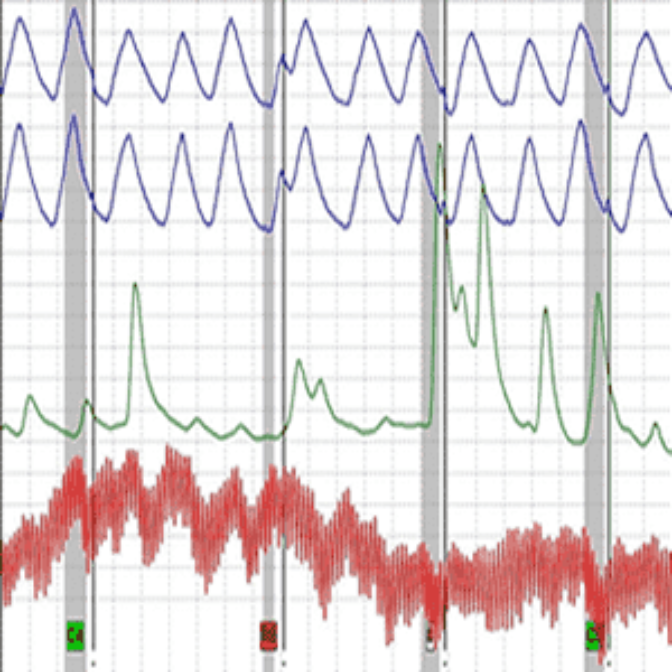
Photo Credit: Polytest.org
Role of Polygraphs in Bodybuilding Competitions
1. Providing Deterrence
The WNBF requires returning athletes to submit to lie detector tests as a standard procedure. As athletes must pass polygraph exams to be allowed back into the competition, that very requirement can serve as an effective deterrence.
Lie detector tests function as the first line of defense against doping in bodybuilding.
Note that the deterrent exams administered by bodybuilding federations are not actual polygraph tests. Rather, they’re 10 to 15-minute interrogations designed to query athletes on their history with controlled substances.
The fact that the 15-minute tests are less expensive than real exams explains their widespread use. However, they’re quite unreliable and easy to manipulate compared to actual polygraphs.
2. Stopping Cheaters in Their Tracks
Jones and Armstrong’s cases highlight how far dopers can go before their past catches up with them.
Both won multiple accolades. They also passed numerous interviews, including interrogations on potential drug use.
By the time the jig was up, their trophy cabinets were full and glittering.
Polygraphs provide a more proactive way of nicking dopers. As users typically undergo lie detector tests 2 – 4 days before competing, federations are able to catch cheaters long before they step onto the stage.
3. Detecting Short-term Doping
Not every doper is fully committed to performance-enhancing drugs. Others are short-term users, turning to anabolic steroids while building up to major competitions.
Unfortunately, PEDs don’t stay in the system forever. Even hair samples known to retain metabolites for the longest period will test negative after a few weeks.
Using polygraphs, federations can uncover doping evidence months or years after the fact.
A bodybuilder who did steroids a decade ago can still fail a lie detector test today.
4. Upholding Sporting Integrity
The WNBF’s popularity was once marred by PEDs, dissuading honest athletes from participating in its competitions.
However, the federation’s reputation rebounded after lie detector tests became a standard anti-doping screening procedure.
By mandating polygraph testing before any competition, bodybuilding federations can restore confidence and integrity in a sport once riddled by incessant doping allegations.
Conducting routine lie detector tests symbolizes an organization’s commitment to fostering a drug-free environment.
5. Promoting Honest Athleticism
Winning a bodybuilding championship is anything but easy. Still, federations must continuously impress the imperative of fair play.
Incorporating polygraph exams into bodybuilding competitions doesn’t merely deter dopers. It also fosters honesty in athleticism, reminding contestants that they can still attain success via the straight and narrow path.
Winners can confidently claim their victories as deservedly earned.
Meanwhile, losers take defeats more graciously, knowing the playing field was level for everyone.

Photo Credit: Unsplash.com
The Significance of Conducting Proper Lie Detector Tests
While most bodybuilding federations utilize “deterrent” polygraph exams that typically last 10 – 15 minutes, a reliable polygraph exam should be 1.5 – 2.5 hours long. The duration includes pre-tests, in-tests, and post-tests.
The pre-test phase involves collecting the examinee’s physiological baselines, which serve as their default state. It’s also during this stage that a polygrapher will incorporate a list of Prohibited Substances into the questions.
Both the examiner and examinee review the questions before proceeding to the next stage.
Next comes the in-test phase, where an athlete responds to a series of pre-designed doping-related questions. Although typically shorter than the pre-test phase, in-test questioning is the most critical part of bodybuilding polygraph testing.
Questions can be;
- Relevant, such as “Did you use any PED in the last one month?”
- Control, such as “Did you ever cheat?”
- Irrelevant, such as “Is your name Billy?”
Last is the post-test phase, which involves data scoring and report writing. A stronger magnitude of response to Relevant than Control questions indicates deception, while the converse suggests honesty.

Photo Credit: Polytest.org
Promoting Fair Play in Bodybuilding with Polygraphs
Professional bodybuilders put every drop of blood, sweat, and tears into every training. So, the last thing they want is to compete with doping opponents.
Polygraph exams can deter crafty athletes, leveling the playing field. Any professional bodybuilder will shun drugs if they know they’ll undergo standard screening before competing in any match.
Lie detector tests also promote fair play by helping weed out doping athletes. By using polygraph findings to corroborate primary evidence, the WNBF can penalize dopers based on solid, irrefutable evidence.
Moreover, bodybuilding federations can leverage polygraph testing to uphold the sport’s integrity. Athletes compete confidently, win genuinely, and lose graciously.