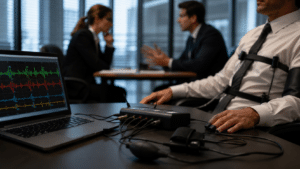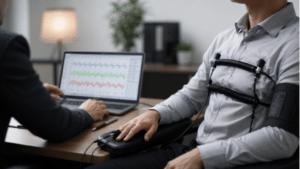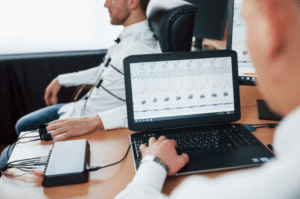

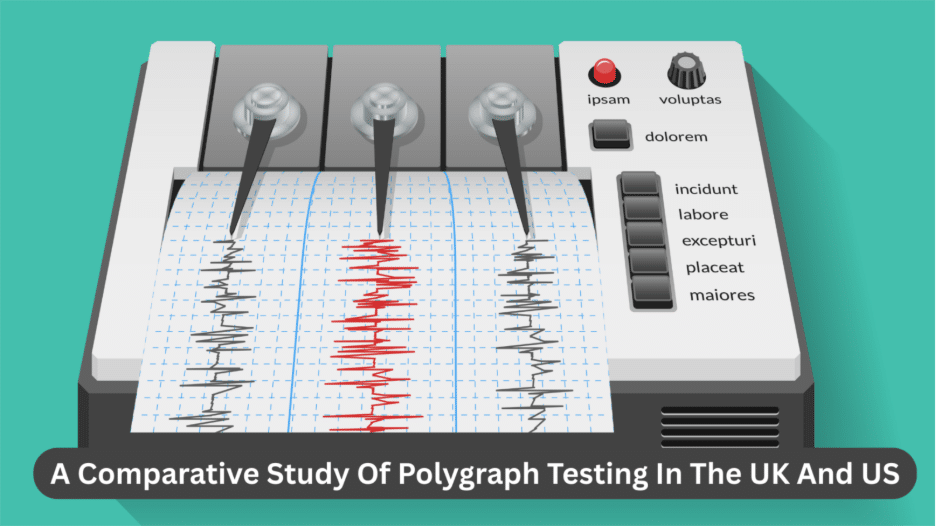
The United States and the United Kingdom are the two biggest users of polygraphs worldwide. The US alone conducts some 500,000 – 2.5 million lie detector tests annually. And while UK figures pale in comparison to that, the country reportedly administers more polygraphs than many European nations combined.
The US and UK lie detector tests are similar in multiple ways.
For instance, both countries emphasize willful examinee consent. Coercion is typically a sufficient ground for discrediting lie detector findings.
Besides, polygraph exams in both countries must be conducted by duly accredited polygraphers.
There are also noticeable similarities in the general application and legal admissibility of lie detector tests. Findings are widely viewed as secondary evidence and often restricted to civil proceedings.
However, the US and UK polygraph landscapes equally differ in many aspects. Here’s a comparative study of polygraph testing in both countries.
1. Industry Regulation
The American Polygraph Association (APA) publishes the industry standards for conducting a credible, accurate, and legally defensible polygraph test in the US.
Examiners must implement any of the APA’s authorized testing methodologies. If a polygrapher opts for a non-APA technique, they must indicate that in writing.
In the UK, the British Polygraph Society regulates polygraph tests internally.
The country is also permissive to reputable international bodies, with APA-accredited examiners notably held in high esteem.
2. Examiner Segmentation
Polygraphers in the United States fall into three broad categories – Government, Law Enforcement, and Private Examiners.
Government polygraphers typically work for federal agencies like the Federal Bureau of Investigation (FBI). Meanwhile, law enforcement examiners assist in routine police investigations.
Private examiners are more broad-spectrum. They may lend their services to drug rehabilitation facilities, relationship counseling centers, sporting federations, etc.
Besides, all three professionals differ in their training levels.
Private and law enforcement examiners typically undergo 10 – 13 weeks of education. Government polygraphers receive more extensive training, usually up to 6 months.
The UK lumps polygraphers into one group. There’s no express categorization, implying that any accredited examiner can be contracted for government and private assignments.
3. Primary Intent of Testing
Lie detector tests in the US have traditionally been deployed in investigative processes to help narrow down the suspect list.
Various entities leverage polygraph findings to corroborate other circumstantial evidence, potentially leading to convictions or acquittals. Some clients also request lie detector evaluations to resolve doubts and restore fractured relationships.
The situation is quite different in the UK.
Rather than help nail suspects, polygraph tests in the UK mostly assist in tracking compliance and mitigating offender risks to society.
4. Use Cases
Polygraphs are deployed in diverse scenarios in the US. Those include law enforcement, government contracting, immigration testing, sexual offender monitoring, etc.
In the UK, lie detector tests are typically used by law enforcement to monitor high-risk individuals like paroled sex offenders. However, the UK’s limited application of polygraph exams isn’t by design. It’s likely because lie detector tests haven’t garnered mainstream recognition compared to the US.
5. Police Adoption
The polygraph is a standard investigation technique used by many US police departments and federal agencies. That’s despite its nuanced admissibility landscape.
After remaining tight-lipped for years, the FBI recently admitted to polygraphing its employees as part of the federal agency’s countersurveillance measures.
The Department of Defense (DoD) also routinely deploys lie detector tests during its tendering procedures.
Polygraphs are also synonymous with law enforcement in the UK. That said, only a few police units administer the tests.
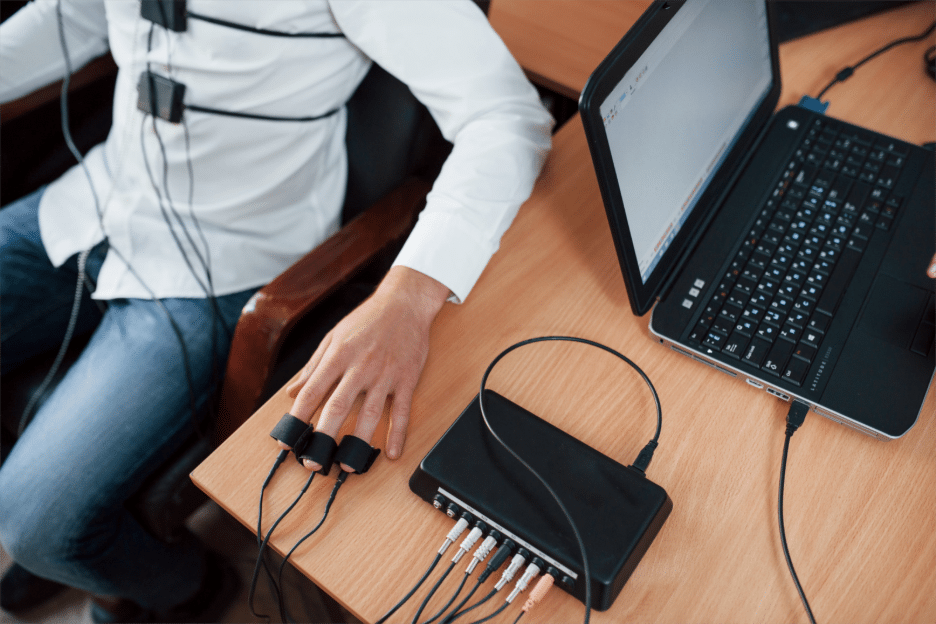
The US Employee Polygraph Protection Act (EPPA) prohibits most private-sector employers from subjecting employees to mandatory lie detector tests.
Employees cannot be coerced into polygraph exams, whether during recruitment or while investigating workplace incidents.
However, the EPPA excludes federal, state, and local governments. Other noteworthy exemptions include security service providers and companies handling controlled substances.
In the UK, polygraphs are almost exclusive to law enforcement. No formal regulations regarding their administration in workplaces, implying limited application in that sector.
7. Legal Admissibility
Polygraph reports are generally inadmissible in the US and UK judicial proceedings, often cited as falling short of the Daubert standard. That said, admissibility in the US varies by state.
New York, Texas, Colorado, Hawaii, and Massachusetts currently do not allow polygraph evidence. Meanwhile, polygraph reports may be admissible in California, Tennessee, Virginia, Oklahoma, Vermont, and North Dakota under special conditions.
Note that each state maintains local polygraph licensing bodies. Ensure an examiner is licensed by the relevant agencies, in addition to possessing APA credentials.
Like the US, the UK laws generally disallow polygraph evidence in criminal proceedings. Except that those restrictions apply uniformly throughout the Kingdom’s four countries rather than being jurisdiction-specific.

UK Versus US: Which Has Better Polygraph Policies?
Both the US and UK have more robust polygraph laws than many countries. But despite various general similarities in lie detector administration, there are certain fundamental differences in terms of regulatory oversight and primary use cases.
Since the United States pioneered the polygraph technique, it’s unsurprising that the practice enjoys higher popularity in the country.
Lie detection laws are also more elaborately defined in the US. There are fewer grey areas in terms of eligible candidates, court admissibility, and specific applications.
The US’s more robust regulatory framework makes it a better destination for lie detector tests. If you must undergo a polygraph exam overseas (including the UK), insist on having it conducted by an APA-accredited examiner.
Remember to also familiarize yourself with basic constitutional rights and local regulations on polygraph admissibility before submitting to the test.