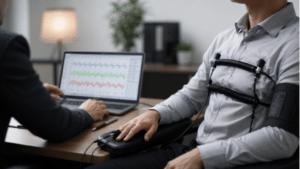


When it comes to polygraph exams, there’s no one-size-fits-all strategy. Each lie detector test requires a unique approach.
To conduct a credible polygraph evaluation, examiners must follow certain industry-stipulated guidelines. The question design rules typically apply across the board.
For instance, every lie detector test must begin with the pre-test phase. This is a preliminary stage where an examiner records the examinee’s physiological baselines.
Next, the process transitions into the in-test phase. Here’s where much of the questioning happens. Examinees answer a series of questions as the polygraph machine records their physiological response to each query in real time.
Finally, examiners compare the in-test data with pre-recorded physiological baselines to infer deception. This constitutes the post-test phase.
While the polygraph process appears rather straightforward, individual test formats vary depending on various dynamics. Here’s a look at how polygraph examiners determine the best testing format for each evaluation.
Factors Determining Appropriate Polygraph Testing Formats
1. Examiner Experience
The success of any lie detector test is largely premised on the examiner’s experience. So, spare no effort while scouting for a qualified polygrapher.
Always seek out examiners who graduated from the American Polygraph Association (APA)-approved schools. Even better if the individual has amassed practical industry experience.
Besides impacting the credibility of lie detector tests, examiner experience also determines the preferred testing format.
Insist on polygraphers who follow APA-validated standards and testing methodologies. Those include Control Question Technique (CQT), Zone Comparison Test (ZCT), the Modified General Question Test (MGQT), et cetera.
Typically, an examiner will deploy a testing format they’re most conversant with. The individual must disclose if they’re using any methodology besides APA-validated ones.
2. Type of Incident Under Investigation
Polygraph exams may target specific incidents like burglary or general screening. Each case requires a unique testing approach.
For instance, the CQT method works best for specific-incident investigations.
CQT involves asking examinees a series of Relevant and Control questions. To infer deception, examiners compare the magnitude of response between the two question sets against pre-recorded physiological baseline data.
Photo Credit: Unsplash.com
3. Number of Incidents Under Investigation
Lie detector tests may seek to resolve single occurrences like theft in the family, or multiple incidents like terrorism and espionage.
Multiple-issue exams usually call for more rigorous techniques like CQT.
Besides, examiners may deploy several methodologies to conclusively resolve the closely intertwined incidents.
Single-issue exams often require a more direct approach. According to the APA, these evaluations can yield impressive accuracy scores of 90+% if professionally conducted.
4. Specificity of Circumstantial Evidence
Polygraph exams don’t typically constitute the first line of investigation.
Before requesting a lie detector test, there must be reasonable grounds for suspicion. The specificity of available circumstantial evidence impacts the choice of the best testing format.
Assume that CCTV surveillance and witness accounts put a suspect at a crime scene despite the person vehemently pleading their innocence. In that case, examiners may deploy the Concealed Information Test (CIT).
Also called the Guilty Knowledge Test (GKT), CIT involves posing a series of neutral and crime-specific questions. It’s premised on the theory that guilty suspects often react dramatically to intimate details about a crime, such as the amount of cash stolen or the murder weapon used.
In contrast, general screening polygraphs wouldn’t require the GKT technique.

Photo Credit: Polytest.org
5. Examinee Condition
An examinee’s medical condition also determines which polygraph test format to use. First, polygraph examiners must conduct extensive preliminary assessments to prequalify individuals for lie detector tests.
People with severe physical pain shouldn’t undergo polygraph evaluations. Their highly sensitive nerves may trigger erratic physiological reactions, compromising the quality of the data recorded by the polygraph machine.
Individuals with severe cardiovascular issues, respiratory diseases, and perception-altering disorders shouldn’t undergo polygraph assessments either.
After clearing examinees for lie detector tests, examiners will still adopt testing methodologies based on a subject’s unique condition.
For instance, the polygrapher may ask about the use of countermeasures while interviewing known pathological liars.
6. Intended Application
Polygraph findings may be used to corroborate or impeach primary evidence during legal proceedings. That brings into focus the raging debate on admissibility.
Note that lie detector tests are generally inadmissible in criminal proceedings. While the tests may be allowed in certain civil lawsuits, admissibility usually rests with the presiding judge or jury.
To conduct legally defensible lie detector tests, examiners often prioritize scientifically validated standards like the Utah Zone Comparison Technique.
Polygraphs designed for non-legal usage may involve less-standardized methods.
Making Inferences
A polygraph examination that yields sufficient data can result in a Deception Indicated (DI) or No Deception Indicated (NDI) verdict.
A DI inference connotes deception, while an NDI conclusion indicates truthfulness.
If the test yields insufficient data, examiners may return an Inconclusive (Inc) or No Opinion (NO) verdict.
An Inc. verdict indicates the polygraph machine recorded valid physiological data. However, the information is insufficient or conflicted; hence falling short of the statistical threshold for a DI or NDI inference.
Meanwhile, a NO deduction means the charts are so distorted that an examiner cannot infer anything meaningful from them.
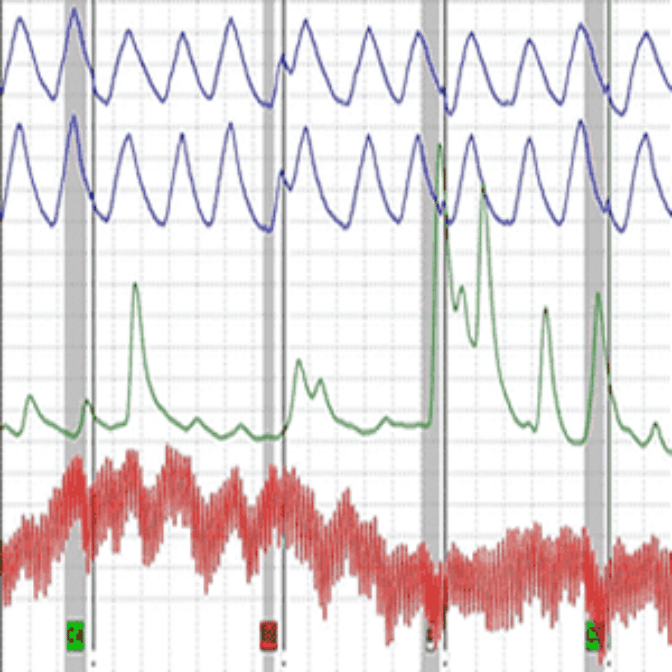
Photo Credit: Polytest.org
Wrap Up
Observing the above criteria can help in selecting the best test format for every polygraph exam.
Whichever format an examiner chooses, lie detector tests must meet the minimum credibility threshold.
That includes preparing examinees adequately for each evaluation, following proper question design rules, and using approved scoring methodologies.