
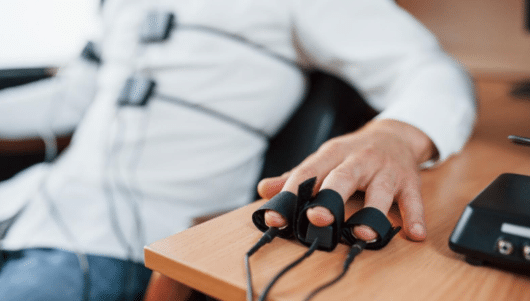
The global sporting industry has churned out numerous renowned athletes. Athletes who filled their trophy cabinets with coveted accolades and, for many years, were regarded as the pride of their countries.
Some of these figures were looked upon as role models by millions of aspiring sportsmen and women around the world. Then, in one fell swoop, their name and reputation crumbled when it turned out they gamed the system to earn their accolades.
Track ‘n field superstar Marion Jones and cyclist Lance Armstrong are perhaps the first names that spring to mind when discussing athletes who fell from grace in the wake of damning doping allegations. However, the list is longer than many industry regulators care to imagine.
What if we could proactively level the playing field and ensure every athlete plays by the rules?
Well, it turns out we can, thanks to innovative lie detection techniques like the polygraph.
Integrating polygraph testing into competitive events can foster integrity in an industry blemished by cheating and dishonesty.
Role of Polygraph Testing In Competitive Events
Doping reports have plagued the global sporting fraternity for years. While many athletes endeavor to play by the rules, some prefer the easy way out.
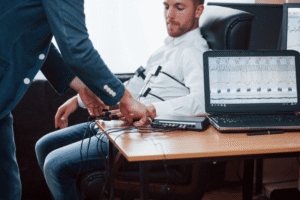
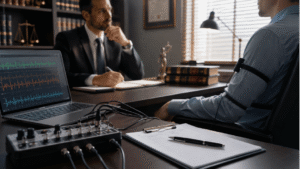
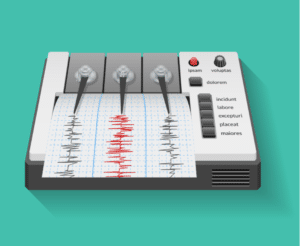
Administering a polygraph test can help get to the bottom of doping allegations.
When used in conjunction with other drug tests, polygraph exams can help federations uncover recent usage of performance-enhancing substances. Failing the test enables relevant bodies to impose necessary sanctions, reinforcing sporting integrity.
Polygraphs can also serve as an effective deterrence. If an athlete knows they’ll undergo procedural lie detector tests, they’ll proactively avoid contact with banned substances.
It’s even more exciting to know there are numerous testing locations worldwide. Thanks to this flexibility, federations can quickly schedule polygraph exams in an athlete’s local cities.
This provides an effective way to monitor good behavior even during sporting breaks and holidays.
How Does The Process Work?
Before polygraphing athletes, there should be reasonable suspicion of doping.
Managers inform competitors of an intention to polygraph them. This is critical, as athletes must give their informed consent for the findings to be valid.
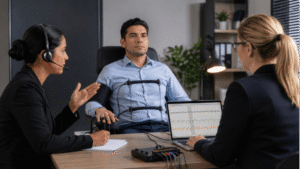
If competitors agree to be polygraphed, their managers schedule an appointment with a licensed polygrapher. The examiner establishes preliminary contact with the athlete.
Initial engagements help the examiner to build a rapport with the examinee and inform them about the upcoming test subject. Besides, an examiner will utilize the opportunity to prepare the examinee accordingly.
The athlete must understand what to eat, how to dress, the recommended sleep duration, and any medications to avoid ahead of the exam. These measures are necessary to improve the test’s accuracy.
If all looks great, the athlete and examiner meet at the predetermined testing location for the actual polygraph evaluation.
Note that athletes and examiners must both be fluent English speakers. In the case of a language barrier, the federation may enlist the services of an interpreter.
Federations That Have Embraced Lie Detector Tests
The World Natural Bodybuilding Federation (WNBF) is perhaps the most noticeable sporting body to have adopted polygraph exams. To comply with anti-doping standards, the WNBF requires its athletes to undergo procedural lie detector tests.
Polygraphs have been part of the WNBF since 1989. By embracing lie detector tests and other anti-doping measures, the federation has restored its reputation after years of rampant doping allegations.
Besides the WNBF, the Organization of Competitive Bodybuilders (OCB) also uses polygraph exams to screen its athletes.
All OCB competitors must pass lie detector tests before competing in any of its events.

Notable Athletes Who’ve Taken Lie Detector Tests
In 2004, track and field athlete Marion Jones became the first high-profile sportsperson in recent history to announce that she had passed a polygraph test. This claim wouldn’t hold, as the BALCO steroids investigation eventually uncovered that Jones used performance-enhancing substances.
Another athlete – Spanish cyclist Alberto Contador – underwent a voluntary polygraph test to clear his name in the wake of damning doping allegations. This was after the cyclist tested positive for clenbuterol during the Tour de France tournament in 2010.
While Contador passed the lie detector test, the Court of Arbitration for Sport (CAS) did not rely on the findings in determining his fate.
There are also athletes who managed to beat lie detector tests despite using banned substances. A case in point is American cyclist Tyler Hamilton, who confessed to doping in his 2012 book.
Other athletes who’ve taken polygraph tests recently include;
- Chelsea winger Mykhailo Mudryk, after testing positive for meldonium
- Arsenal winger Bukayo Saka, to gauge his attitude towards his personal and the team’s achievements
- Track coach Trevor Graham, who was involved in the BALCO scandal on allegations for encouraging doping
Fostering Honesty and Discipline in Competitive Sports With Polygraph Tests
Lie detector tests have played an instrumental role in restoring dignity to various competitive events. While the technique is yet to garner mainstream acceptance, success stories by sporting federations like the WNBF lend credence to its reliability.
In fact, we’ve witnessed mounting advocacy for anti-doping polygraph tests by high-ranking sports officials lately. It may only be a matter of time before other professional sporting bodies embrace this revolutionary lie detection technique.
However, polygraph testing cannot be used as a standalone way to investigate doping allegations. The technique is most effective when combined with other traditional drug test methods, such as urinalysis.
Besides, it’s best to recommend lie detector tests only where there’s reasonable suspicion of doping and other unsportsmanlike conduct.